
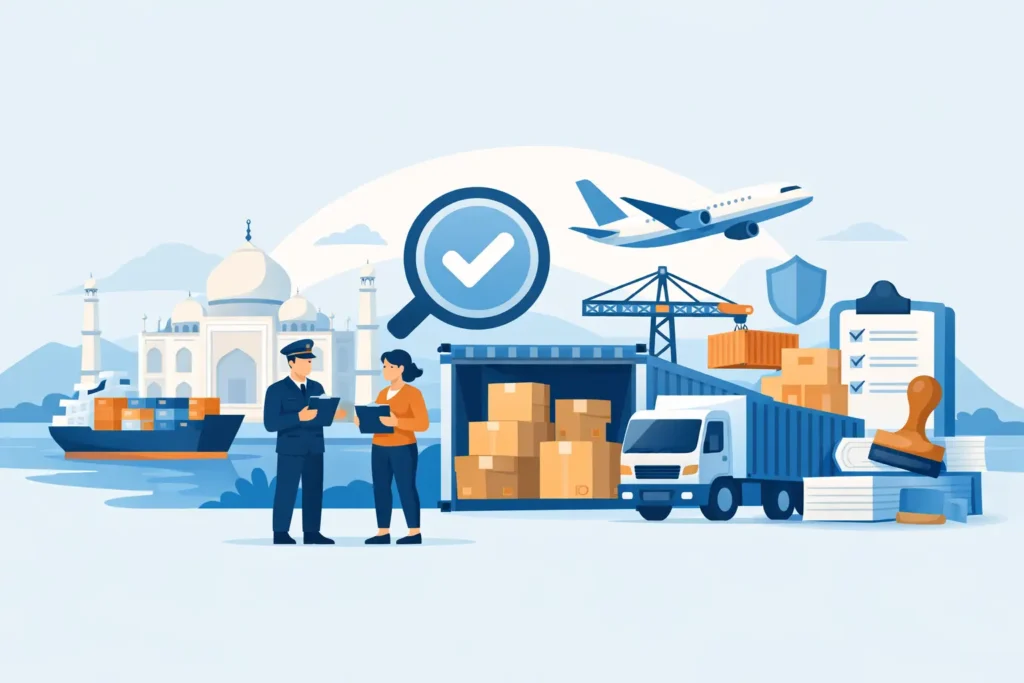
A shipment can arrive on schedule, with the right packing, the right carrier, and the right rate, then still lose days at the border because one code, license, or declaration does not match. That is why customs clearance in India is not just a paperwork step. For importers, exporters, and supply chain teams, it is a control point that directly affects landed cost, delivery commitments, and customer confidence.
India is a major trade market, but it is also a compliance-driven one. Clearance is shaped by product classification, valuation, licensing rules, duties and taxes, port procedures, and the accuracy of the documents submitted. If you are shipping commercial cargo into or out of India, speed depends less on luck and more on preparation.
What customs clearance in India actually involves
Customs clearance in India is the formal process of declaring goods to customs authorities so cargo can legally enter or leave the country. For imports, this means filing the required declaration, presenting supporting documents, assessing duty liability, and obtaining release. For exports, it means verifying the cargo, filing the shipping documents, and securing permission for export.
In practice, the process starts much earlier than cargo arrival. Product details, invoice values, country of origin, import eligibility, and consignee registration all need to line up before the shipment reaches the airport, seaport, or inland customs point. When they do not, delays usually follow.
This is also where many businesses underestimate the difference between freight movement and customs handling. Freight gets cargo to the gateway. Customs determines whether the cargo can move beyond it, under what duty structure, and with what documentation trail.
Why delays happen even when cargo is ready
The most common clearance problems are not dramatic. They are small errors with large consequences. A mismatch between the invoice and packing list, the wrong HSN classification, missing product literature, incomplete labeling details, or uncertainty around valuation can trigger queries or inspection.
Some shipments face additional scrutiny because of the commodity itself. Electronics, machinery, chemicals, automotive parts, medical products, food items, and regulated materials often require closer review. The same applies to high-value cargo and first-time import shipments, where customs may examine documents and goods more carefully.
Port and airport conditions matter too. Congestion, examination queues, system issues, and holidays can affect timing. So can the shipping mode. Air freight may move faster overall, but if the documents are weak, speed in transit does not help much after arrival.
The core documents importers and exporters should get right
Every shipment has its own compliance profile, but a few documents are fundamental. These typically include the commercial invoice, packing list, bill of lading or airway bill, import or export declaration, and any licenses or certificates required for the product category.
For imports, businesses often also need details tied to importer registration, product classification, and tax treatment. For exports, the focus is more on accurate shipment declaration, destination requirements, and proof that the goods match what is being exported.
Accuracy matters more than volume. A shipment with six clean, consistent documents will usually move more smoothly than one with a larger file full of contradictions. Product descriptions should be specific enough to support classification and valuation. Generic phrases like spare parts or machinery accessories can create questions that delay release.
Classification and valuation are where risk builds up
Two of the most important issues in Indian customs clearance are how the goods are classified and how they are valued. Classification determines the duty structure, applicable notifications, and whether restrictions or exemptions apply. Valuation affects assessable value, duty payable, and possible review by customs.
This is where businesses can run into trouble by relying on assumptions. A supplier may describe the product one way for commercial convenience, but customs may classify it differently based on material, use, or technical function. That difference can change the duty rate and trigger reassessment.
Valuation has similar complexity. Customs authorities look at whether the declared value reflects the actual transaction and whether additions such as freight, insurance, assists, commissions, or royalties need to be considered. If the declared value appears inconsistent with the product or market norms, customs may request clarification.
For repeat importers, getting classification and valuation right from the start supports more than one shipment. It creates consistency across future filings and reduces avoidable disputes.
Import clearance vs export clearance in India
Import and export clearance share the same compliance foundation, but the operational pressure points are different.
Import clearance is usually more duty-sensitive. Businesses are focused on correct assessment, faster release, and avoiding storage, detention, or demurrage. Delays here can disrupt production schedules, inventory planning, and final-mile commitments.
Export clearance is often more time-sensitive. Missing a vessel cutoff or airline connection can affect buyer commitments, letters of credit, and project timelines. Exporters also need to ensure that product declarations, destination country requirements, and shipping instructions are aligned before cargo reaches the gateway.
For companies moving cargo regularly between India, the UAE, and other markets, this distinction matters. Imports tend to carry higher cost exposure at the clearance stage. Exports carry higher scheduling exposure. Both need disciplined documentation.
How a customs broker or freight partner adds value
A capable customs handling partner does more than submit forms. The real value is in reviewing the shipment before filing, identifying risk points early, coordinating with transport and warehouse teams, and responding quickly if customs raises a query.
That matters most when the cargo is specialized. Automotive shipments, oversized equipment, project cargo, consolidated freight, and regulated goods often require closer coordination between documentation, cargo handling, and clearance timing. In those cases, customs cannot be treated as a separate task from logistics planning.
Experienced support is also useful when the answer is not simply fast or cheap. Sometimes paying duty under one route gets the cargo released faster, while claiming an exemption may require more review and more time. Sometimes splitting shipments improves handling, while in other cases it increases compliance work. The right approach depends on the cargo, urgency, and cost sensitivity.
Practical ways to reduce customs delays in India
Most customs issues can be reduced before the cargo moves. Start with product-level data, not just shipment-level data. That means clear descriptions, technical specifications where needed, correct classification logic, and consistency across invoice, packing list, and transport documents.
It also helps to review whether the shipment needs any special approvals, testing references, labels, or certificates before dispatch. Waiting until the goods arrive to discover a licensing gap is expensive.
Communication is another overlooked factor. Procurement, supplier, freight forwarder, customs team, and consignee should all be working from the same commercial and shipping information. When one party revises a value, quantity, or product description without updating the others, customs discrepancies are almost guaranteed.
For companies with recurring trade lanes, standardizing document templates and classification references can save time on every shipment. This is especially useful for businesses managing multiple suppliers or mixed cargo profiles.
Choosing the right clearance approach for your cargo
There is no single best method for every shipment. The right clearance setup depends on commodity, shipment mode, arrival point, urgency, and internal compliance capability.
A manufacturer importing production-critical components may prioritize speed and predictability over minor cost savings. An SME managing lower shipment volumes may need more hands-on support with documentation and regulatory interpretation. A project cargo shipper may need customs planning integrated with route surveys, handling equipment, and delivery scheduling.
This is where working with an operator that understands both freight execution and customs process can make a difference. Mass Freight Forwarding supports cargo movement with customs handling that fits the shipment, not the other way around. That is especially valuable for businesses moving freight between India, the UAE, and other global markets where timing and compliance need to work together.
The bigger business impact of getting clearance right
When customs runs efficiently, the benefit is not limited to a faster release order. Inventory becomes easier to plan. Sales teams can commit delivery dates with more confidence. Finance gets cleaner duty visibility. Operations spend less time chasing paperwork and more time managing movement.
The opposite is also true. Repeated customs delays create hidden costs that do not always show up in the freight quote – storage, container detention, missed production windows, customer penalties, and internal time spent resolving avoidable issues.
That is why customs should be treated as part of supply chain strategy, not just compliance administration. The businesses that handle it well are usually not the ones reacting fastest at the port. They are the ones that prepared earliest.
If your cargo is moving into or out of India, the best time to solve customs problems is before the shipment is booked. A careful review at the start often saves far more time and cost than any recovery effort after arrival.
