
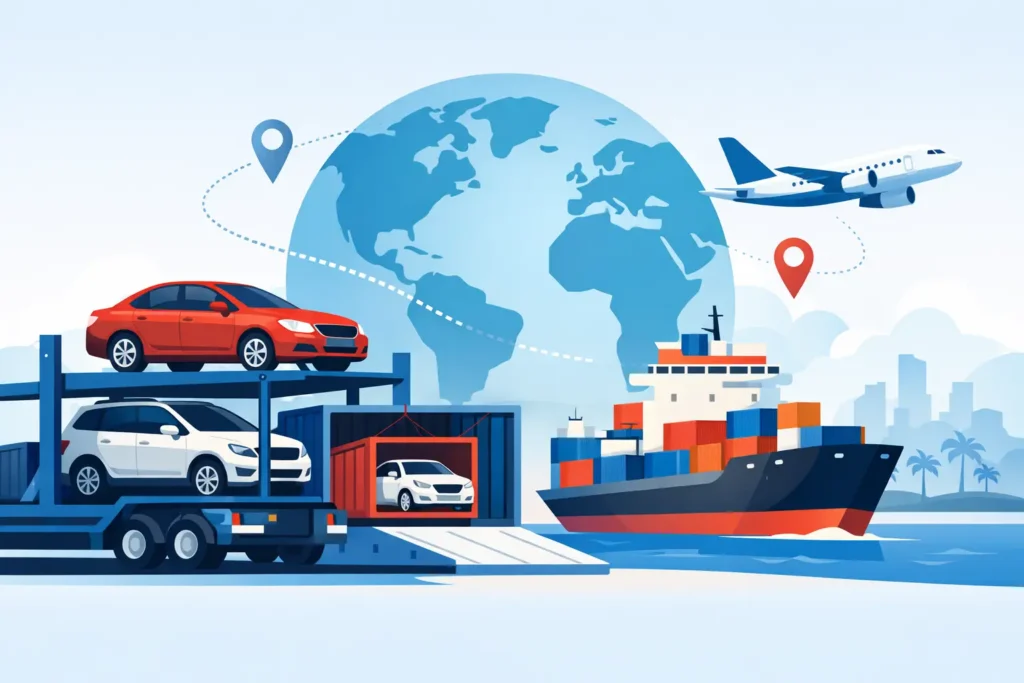
When a vehicle needs to move across a country or across oceans, the shipping method matters as much as the destination. The best car shipping options depend on the vehicle type, route, delivery deadline, and how much handling risk your business or client is prepared to accept. For importers, exporters, dealers, and individuals moving high-value vehicles between India, the UAE, and other global markets, choosing the right mode is a cost and operational decision – not just a transport booking.
A standard sedan headed to a major port has very different requirements than a luxury SUV, an EV, or a non-running project vehicle. The right decision usually comes down to five variables: protection, price, transit time, port access, and customs complexity. Once those are clear, the shipping method becomes much easier to match.
Best car shipping options by shipment type
There is no single best method for every vehicle movement. The strongest option is the one that fits the cargo profile and trade lane without creating delays, unnecessary handling, or avoidable cost.
Roll-on/Roll-off for cost-efficient port-to-port shipping
Roll-on/Roll-off, or RORO, is often one of the most practical choices for operational vehicles. The car is driven onto a specialized vessel at origin and driven off at destination. This reduces lifting requirements and can keep pricing competitive, especially on established international routes.
RORO works well when the vehicle is in running condition and the origin and destination ports support this service. It is commonly chosen for standard passenger vehicles, SUVs, and fleet movements where cost control is a priority. For businesses moving multiple units, RORO can offer predictable scheduling and straightforward handling.
The trade-off is exposure. While vehicles remain secured on the vessel, they are not enclosed in a private container. That makes RORO less suitable for high-value cars, vehicles with loose accessories, or shipments where the route includes stricter handling preferences.
Container shipping for protection and flexibility
Container shipping is one of the best car shipping options when protection matters more than getting the lowest freight rate. A vehicle is loaded into a container, secured for transit, and moved through standard ocean freight channels. This method gives added shielding from weather, port exposure, and incidental contact.
For luxury vehicles, classic cars, EVs, and premium exports, containerized shipping is often the preferred option. It also gives more flexibility when the shipment includes spare parts, accessories, or related cargo that must travel with the vehicle, subject to destination customs rules.
A sole-use container offers the highest control, while shared container shipping can reduce cost if timing and compatibility allow. The trade-off is price. Container shipping typically costs more than RORO, and loading must be done carefully with proper securing standards to avoid movement during transit.
Enclosed truck transport for premium domestic or regional moves
If the vehicle is moving over land rather than by sea, enclosed truck transport is the premium option. The vehicle remains protected inside a trailer, away from weather, road debris, and public exposure. This is often the right fit for luxury inventory, collector cars, and high-visibility branded vehicles.
For regional movements tied to port delivery or final-mile handover, enclosed trucking can support a cleaner chain of custody. That matters when clients expect minimal handling and documented condition at each stage.
The cost will be higher than open carrier transport, so this option makes the most sense when vehicle value, presentation, or sensitivity justifies the premium.
Open carrier transport for standard domestic movement
Open carrier transport is widely used for road-based vehicle shipping because it is available, efficient, and generally more affordable than enclosed service. It is a practical choice for standard commercial vehicles and routine domestic transfers where some exposure to weather and road conditions is acceptable.
This method is less common for international end-to-end moves on its own, but it is frequently part of the inland leg before port loading or after customs clearance. For businesses managing cost on lower-risk vehicles, open transport can be the right supporting mode within a larger logistics plan.
Air freight for urgent or exceptional cases
Air freight is not the default answer for vehicle shipping, but it has a place. When a high-value vehicle must arrive on a tight deadline for an event, exhibition, urgent sale, or client requirement, air transport can be justified.
It is the fastest option by a wide margin, but also the most expensive. There may also be additional restrictions around dimensions, battery compliance, fuel preparation, and airport handling. For most shipments, air freight is only viable when time has a higher value than transport cost.
How to choose among the best car shipping options
The first question is not price. It is what the shipment can tolerate.
If the vehicle is operational, moving between ports with strong RORO coverage, and cost is the main concern, RORO is often the right place to start. If the vehicle is premium, rare, or sensitive to exposure, container shipping usually provides better risk control. If the move is domestic or part of a regional inland transfer, the decision may come down to open versus enclosed trucking.
Transit time also needs a realistic review. The cheapest mode can become expensive if delays affect a sale, project milestone, auction date, or customer handover. The same applies to routing. A lower freight rate through a less efficient port may increase inland transport, storage, and customs coordination costs.
For many businesses, the best decision is not a single mode but a coordinated solution. A car may move by enclosed truck to port, ship by container, and then clear customs with final delivery arranged inland. That kind of planning reduces handoff risk and keeps timelines more predictable.
Cost factors that change the right option
Vehicle shipping rates are shaped by more than distance. Size, weight, route, origin and destination access, seasonality, insurance requirements, and destination regulations all affect the final landed cost.
Container shipping may appear more expensive at first glance, but for high-value vehicles it can be more economical in the broader risk picture. RORO may offer lower ocean freight, but if the route requires added inland movement or if the vehicle needs extra handling controls, the gap can narrow.
Customs requirements can also influence the best car shipping options. Documentation standards vary by country, and mistakes at origin often lead to avoidable delays at destination. Export permits, ownership documents, invoices, inspection certificates, and emissions or compliance requirements must all align with the route. This is especially important on corridors involving India and the UAE, where timing and paperwork quality directly affect release and delivery planning.
Protection, insurance, and vehicle condition checks
Car shipping should always begin with condition documentation. Clear photos, inspection notes, mileage records, and accessory checks create a baseline before pickup or port delivery. This matters for commercial shipments and private vehicle moves alike.
Insurance should also match the exposure level. A standard operational car may need a different coverage approach than a luxury vehicle, classic model, or EV. The goal is not just to have insurance in place, but to confirm what is covered during inland transit, port handling, ocean carriage, and storage if delays occur.
Battery-powered vehicles deserve extra attention. EV shipments can involve specific carrier requirements, charge-level rules, and documentation related to battery systems. That does not make them difficult to ship, but it does mean planning cannot be left until the last minute.
Why route expertise matters as much as the shipping method
The shipping mode is only one part of successful vehicle transport. The route, customs process, and local coordination often determine whether a shipment arrives on schedule and in expected condition.
A logistics partner with experience across India, the UAE, and international trade lanes can help identify where a method works well and where it creates friction. For example, a route that looks suitable for RORO may not be ideal if destination handling is limited or if inland connectivity adds delays. In those cases, a containerized move with coordinated clearance may produce a better overall result even if the freight line item is higher.
This is where operational planning adds value. Mass Freight Forwarding supports car shipping as part of a broader end-to-end logistics model, which is often the difference between a simple booking and a controlled shipment.
The practical answer for most shippers
For standard running vehicles, RORO is often the most cost-effective option. For premium, sensitive, or high-value units, container shipping usually offers the best balance of protection and control. For inland moves, open carriers suit routine transfers, while enclosed trucks are the safer choice for vehicles that cannot be exposed.
The best car shipping options are the ones matched to the real shipment, not the lowest quote on paper. If you start with the vehicle profile, route constraints, and customs requirements, the right path usually becomes clear – and the shipment is far less likely to surprise you later.
