
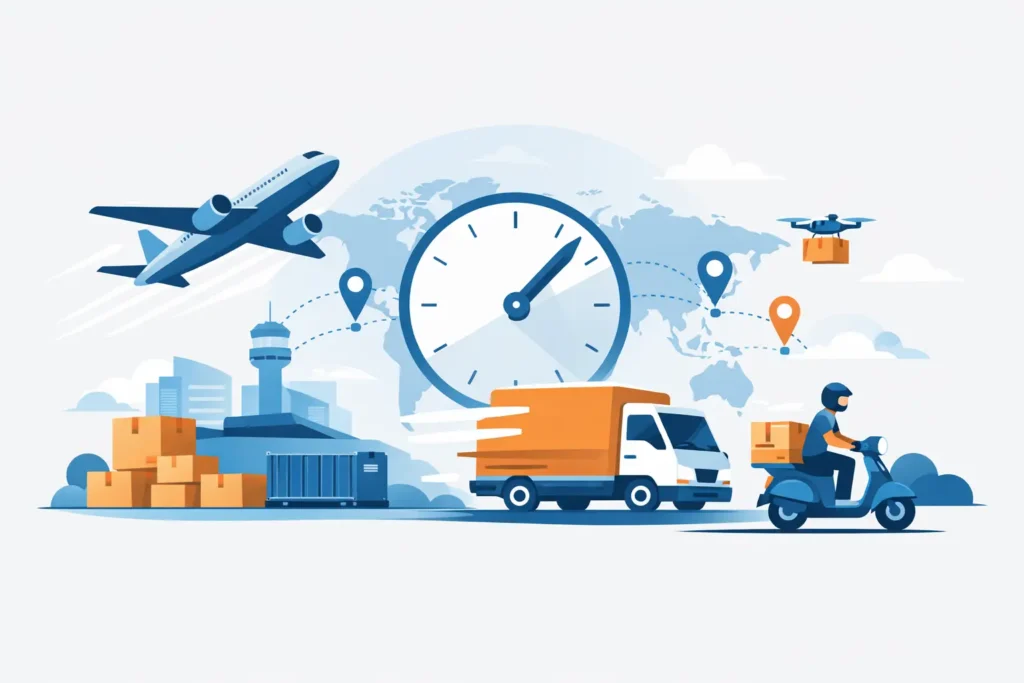
A production line is waiting on a replacement part in Dubai. A retail launch in Mumbai is missing inventory held up in transit. A customer has promised delivery dates that cannot move. In moments like these, urgent cargo delivery options are not just a shipping question – they are a business continuity decision.
Speed matters, but speed alone is not enough. The right urgent shipment plan depends on the cargo, the route, customs requirements, cut-off times, and how much risk your business can absorb if something goes wrong. For importers, exporters, and supply chain teams moving freight to and from India, the UAE, and other global markets, choosing the right mode quickly can reduce downtime, protect margins, and keep customer commitments intact.
What urgent cargo delivery options usually include
Most urgent freight moves fall into a few practical categories. Air freight is the first choice when transit time is the top priority. It offers the fastest line-haul for international cargo, especially for commercial shipments that need predictable flight schedules and airport handling. For many businesses, this is the default answer when time is measured in hours or a few days.
Express air cargo is a step further when the shipment is small enough, high enough in value, or critical enough to justify premium handling. This can work well for spare parts, electronics, medical-related cargo, urgent documents tied to trade, or samples needed for approvals. The trade-off is clear: the faster and more tightly managed the service, the higher the cost per kilo.
Land freight can also be an urgent option, particularly for domestic moves or cross-border regional delivery where airport processing would add unnecessary time. A dedicated truck or sprinter van can outperform other modes on shorter routes because it avoids cargo build-up, terminal transfers, and flight dependency. This is often overlooked by businesses that assume urgent always means air.
There are also hybrid solutions. A shipment may move by air to the closest major gateway, then continue by dedicated trucking for final delivery. In other cases, cargo is split, with critical items sent by air and the remaining volume following by ocean or standard freight. That approach can protect production timelines without forcing the entire shipment into a premium rate structure.
Choosing urgent cargo delivery options by cargo type
Not every shipment should be rushed in the same way. If you are moving machine parts to prevent manufacturing downtime, the fastest direct routing is usually worth the premium. Every hour of delay may cost more than the freight itself. If you are shipping retail inventory, urgency still matters, but there may be room to prioritize only the launch-critical SKUs and move the balance on a lower-cost schedule.
High-value cargo needs a different lens. Security, chain of custody, packaging, and insurance become just as important as transit speed. The fastest route is not always the safest route if it increases handling points or introduces avoidable transfers. For electronics, automotive components, luxury goods, and controlled commercial cargo, an urgent plan should be built around both timing and exposure.
Oversized or project cargo presents another challenge. Many businesses assume urgent delivery is unrealistic for out-of-gauge freight, but partial acceleration is often possible. Critical components can be advanced ahead of the full project shipment, while permits, route planning, lifting requirements, and special handling are coordinated separately. That kind of planning matters more than simply labeling the shipment urgent.
When air freight is the right answer
Air freight is usually the strongest option when the cargo is time-sensitive, commercially critical, and suitable for airport handling. It works best for medium-weight or lower-volume shipments where the speed benefit clearly outweighs the higher freight cost. It is also valuable when missed delivery dates trigger contractual penalties, production losses, or stockouts.
That said, air freight has limits. Airline cut-offs, security screening, aircraft space, dangerous goods rules, and customs documentation all affect real transit time. A shipment booked late in the day may still miss the flight you were counting on. If paperwork is incomplete, the cargo can lose the very time you paid to save.
For this reason, urgent air moves should be handled with full document readiness before pickup whenever possible. Commercial invoice details, packing lists, HS classification, permits, and consignee information should be checked early. Fast transport with slow paperwork is still slow.
When dedicated trucking or land freight makes more sense
For domestic delivery and selected regional corridors, dedicated road transport can be the more reliable urgent option. It gives businesses greater control over departure timing, fewer handling points, and direct delivery to site. If the cargo needs to reach a factory, warehouse, retail location, or project site without terminal delays, road freight can offer a shorter real-world timeline.
This is especially useful when shipments are bulky, fragile, or not ideal for airline constraints. A dedicated vehicle can also support special loading needs, controlled handling, and better flexibility for after-hours pickup and delivery. In urgent logistics, fewer transfers often mean fewer chances for delay.
The trade-off is route-dependent. Road transport is vulnerable to border processes, driver-hour restrictions, traffic, weather, and regional permitting. The best choice comes down to actual door-to-door timing, not assumptions about which mode sounds faster.
Customs can decide whether a shipment is truly urgent
Many urgent shipments lose time at customs, not in transit. This is common on India-UAE and UAE-global trade lanes where documentation accuracy, product classification, and local compliance can either keep freight moving or stop it completely.
A practical urgent cargo strategy includes customs planning from the start. That means verifying whether the shipment needs special approvals, whether the product description is precise enough, whether values match supporting documents, and whether the consignee is prepared for clearance on arrival. Even a same-day uplift can turn into a multi-day delay if clearance is not lined up.
For businesses shipping regularly, this is where working with a freight forwarder that understands both transport and customs handling can save more time than paying for a faster flight. Execution matters most when deadlines are tight.
Cost control without slowing down the shipment
Urgent shipping costs more, but overpaying is not the same as moving faster. One of the smartest ways to manage cost is to separate what is truly critical from what is simply preferred. If only part of the shipment is time-sensitive, split the cargo. Send the urgent portion on priority service and route the rest through standard freight.
Packaging also affects price and timing. Poorly packed cargo can lead to remeasurement, repacking, refusal by carriers, or damage claims. For air cargo especially, dimensions matter as much as weight. A well-prepared shipment moves faster through acceptance and avoids unnecessary charges.
It also helps to be realistic about service levels. The fastest premium option is not always necessary. If delivery by tomorrow and delivery by the next morning create the same business outcome, there is no reason to buy a more expensive service than you need.
How to evaluate urgent cargo delivery options quickly
When time is short, decision-making needs structure. Start with the delivery deadline that actually matters to the business, not the one that simply feels safest. Then confirm the shipment details: dimensions, weight, commodity, value, packaging status, pickup location, delivery point, and readiness of documents.
Next, compare door-to-door transit, not just airport-to-airport or terminal-to-terminal timing. Include pickup availability, cut-off times, customs clearance, and final-mile delivery. This is where many urgent plans fail. A fast line-haul with a weak last mile is still a slow delivery.
Finally, weigh the financial impact of delay against the freight premium. If a delayed part stops production, premium freight is usually justified. If the shipment supports a lower-priority replenishment cycle, a moderated service may be the better commercial decision.
For businesses moving freight across India, the UAE, and international trade lanes, this is where an experienced logistics partner adds value. Mass Freight Forwarding supports urgent shipments by aligning mode selection, customs coordination, and delivery planning around the actual business deadline rather than a generic speed claim.
The best urgent option is the one you can execute cleanly
Urgency creates pressure, and pressure often leads to expensive decisions made too quickly. The better approach is calm triage: choose the mode that fits the cargo, prepare the documents before pickup, plan for customs early, and avoid paying for speed you cannot actually use. When the shipment is critical, execution is what protects the timeline.
If you are facing a tight delivery window, the most useful question is not, “What is the fastest service available?” It is, “Which of these urgent cargo delivery options gets this shipment delivered on time with the fewest chances to fail?” That is usually the decision that keeps freight moving and business on track.
