
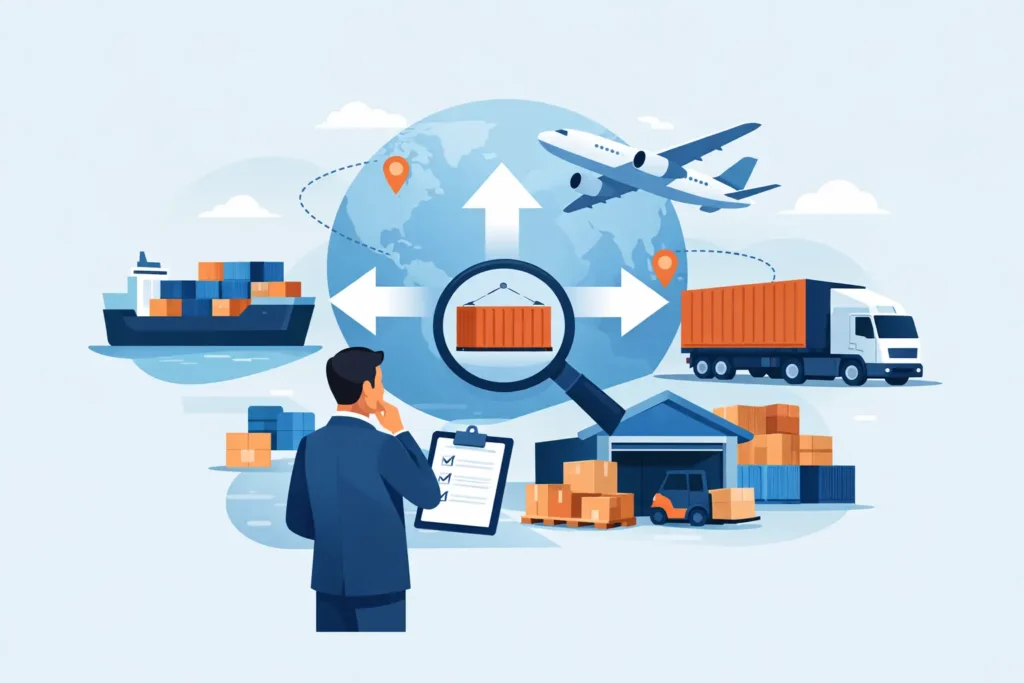
A delayed shipment rarely starts with a delayed vessel. More often, it starts much earlier – with the wrong forwarding partner, unclear ownership, weak customs coordination, or poor communication when plans change. If you are working out how to choose freight forwarder support for your business, the real question is not who can move cargo. It is who can move it reliably, compliantly, and with the least disruption to your supply chain.
That decision matters even more when you are shipping through complex trade lanes such as India, the UAE, and global destinations where timing, documentation, and local coordination can affect cost just as much as freight rates do. A good freight forwarder helps you plan better, reduce avoidable delays, and keep control over cargo from origin to delivery.
How to choose freight forwarder support that fits your operation
The best freight forwarder for one shipper may be the wrong fit for another. A company moving urgent air cargo, for example, needs a different service model than a business importing containerized raw materials on a fixed monthly schedule. That is why price alone is not a useful filter.
Start with your cargo profile and shipping pattern. Consider what you ship, how often you ship, the value of the goods, the urgency, and the routes involved. If your cargo includes oversized machinery, vehicles, LCL shipments, or regulated goods, your forwarder should have proven experience handling those exact requirements. General freight experience is helpful, but specialized cargo often depends on precise planning, documentation, and handling standards.
Trade lane expertise is equally important. A forwarder may be strong in one region and less capable in another. If your business depends on cargo moving to or from India and the UAE, local customs knowledge and operational presence can make a major difference. Border procedures, port processes, and document expectations are not identical across markets. The forwarder you choose should understand those differences in practical terms, not just at a high level.
Look beyond rates and ask what the quote actually covers
Freight pricing can look competitive on paper and still become expensive in execution. This is one of the most common mistakes shippers make when comparing providers. A low base rate does not tell you much unless you know what is included, what is excluded, and where extra charges are likely to appear.
Ask for clarity on origin handling, destination handling, customs clearance support, warehousing if needed, insurance options, delivery arrangements, and any surcharges tied to congestion, storage, demurrage, or documentation amendments. The right partner should explain costs in plain terms and identify where variables may affect the final invoice.
There is also a trade-off to consider. Some shippers genuinely need the lowest possible freight spend because margins are tight and cargo is not time-sensitive. Others are better served by paying slightly more for better coordination, stronger visibility, and fewer exceptions. The cheaper option is not cheaper if it creates recurring delays, penalties, or customer service issues downstream.
Evaluate customs capability, not just transport capability
Freight movement and customs clearance are closely linked, especially on busy international routes. A forwarder can arrange transport perfectly and still leave you exposed if the documentation is incomplete or if import and export procedures are handled reactively.
When thinking about how to choose freight forwarder services, ask detailed questions about customs support. Do they manage both export and import documentation? Can they advise on paperwork requirements before cargo moves? Do they have practical experience clearing goods in the countries you ship to most often? Can they coordinate quickly if customs raises a query or requests additional documents?
This is particularly important for businesses moving cargo through India and the UAE, where timing can depend on accurate declarations, local process knowledge, and responsive handling on the ground. If your shipment has commercial value, time pressure, or customer commitments attached to it, customs expertise is not optional. It is part of the service quality.
Communication is a service feature, not an extra
Most freight problems are manageable when they are flagged early. They become expensive when no one updates you until the cargo is already delayed. That is why communication standards should be part of your selection criteria from the start.
A dependable forwarder should be clear about who manages your account, how shipment updates are shared, and what happens when schedules change. Some businesses want regular milestone reporting and proactive alerts. Others only need escalation on exceptions. Neither model is wrong, but the service approach should match your internal workflow.
Ask how quickly they respond to booking requests, quote revisions, and operational issues. Pay attention to whether answers are direct and specific. If communication feels vague during the sales stage, it usually does not improve once cargo is in transit.
Check whether the forwarder can scale with your needs
A shipment provider that works well for occasional cargo may not be the right long-term logistics partner once your volume grows. That does not mean you need the biggest company in the market. It means you need one that can support the next stage of your operation.
If your business may expand into new regions, increase shipment frequency, or require added services such as warehousing, door-to-door delivery, cargo insurance, or 3PL support, it helps to work with a forwarder that can handle more than port-to-port transport. The more connected the service model, the fewer handoffs you need to manage across vendors.
This becomes even more valuable when cargo is varied. A shipper may need FCL one month, LCL the next, and urgent air freight for stock recovery after that. Flexibility matters because supply chains do not stay static for long.
Experience should be practical and relevant
Years in business matter, but relevant execution matters more. A forwarder with direct experience in your cargo type, route, and compliance requirements is usually a better fit than one with a broader but less focused profile.
Ask for examples of similar shipments they handle. If you move automotive cargo, project cargo, break bulk, or high-value goods, the provider should be able to explain handling methods, transit considerations, and risk controls without speaking in generalities. Reliable forwarding is built on operating discipline, not just sales language.
This is where a company like Mass Freight Forwarding can be relevant for shippers working across India, the UAE, and wider global trade lanes, especially when shipments involve both transport coordination and customs-facing execution.
Watch for warning signs before you commit
The wrong forwarder often reveals itself early. Quotes may be slow, cost breakdowns may be unclear, and responsibility may shift between teams before the first booking is even confirmed. Those are not minor annoyances. They usually signal larger service issues once cargo starts moving.
Be cautious if a provider cannot explain routing options, avoids discussing customs responsibility, or gives generic assurances instead of operational detail. The same applies if they treat all cargo alike. Your business may need a standard shipping solution, but even standard freight requires route planning, timing awareness, and a workable fallback when schedules move.
A useful test is to bring up a realistic problem scenario. Ask what they would do if cargo misses a connection, if customs requests amended documents, or if your consignee needs delivery timing changed. Their answer should reflect process, ownership, and experience.
Make the decision based on fit, not promises
The strongest forwarding partnerships are built on consistency. You want a provider that understands your trade lanes, explains costs clearly, responds quickly, and can support your cargo without creating extra work for your team. That might be a specialist with regional strength, or it might be a broader operator with the right local capabilities. It depends on what your business ships and where friction usually appears.
If you are deciding how to choose freight forwarder services, focus on the basics that affect outcomes every day: route knowledge, customs handling, communication, pricing clarity, and the ability to adapt when shipments do not go exactly as planned. Freight moves best when the planning behind it is steady.
Choose the partner that makes your operation easier to run, not just easier to quote.
