
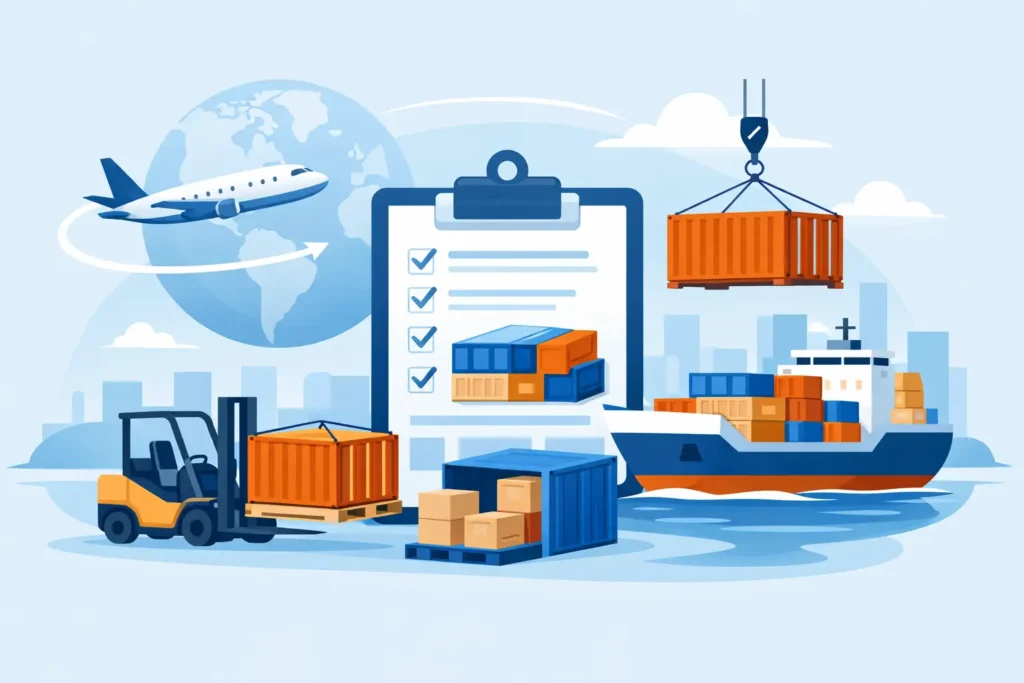
A delayed LCL booking usually starts with a small gap in information – the wrong carton dimensions, a missing HS code, or a pickup date that was never confirmed. By the time cargo reaches the warehouse, that small gap can turn into rolled bookings, extra charges, or customs questions. If you are trying to understand how to book LCL shipment properly, the goal is not just to get space on a vessel. The goal is to move cargo on time, at the right cost, with no surprises at origin or destination.
What booking an LCL shipment actually involves
LCL, or less than container load, is designed for shipments that do not need a full container. Your cargo shares container space with other shipments, which helps control cost when volume is too low for FCL. That sounds simple, but the booking process has more moving parts than many first-time shippers expect.
When you book LCL, you are not only reserving ocean space. You are also aligning origin handling, consolidation cutoffs, documentation, customs requirements, and destination deconsolidation. If one part is incomplete, the entire shipment can slow down. That is why experienced freight forwarders ask detailed questions before confirming the booking.
How to book LCL shipment step by step
The most efficient way to book LCL is to prepare the shipment details before asking for a rate or sailing option. A forwarder can only give accurate routing, cost, and transit guidance if the shipment profile is clear.
Start with the cargo details
You will usually need the shipper and consignee details, cargo description, number of packages, dimensions, gross weight, and total volume in cubic meters. Commodity matters because not every LCL warehouse or carrier accepts every type of cargo. If the shipment includes batteries, chemicals, liquids, or cargo with special packing needs, this must be declared upfront.
Packaging details matter more in LCL than many shippers realize. Since cargo is consolidated with other freight, cartons and pallets need to be stable, stackable when appropriate, and clearly labeled. Weak packaging can lead to damage risk during handling and deconsolidation, even if the ocean leg itself is smooth.
Confirm the shipment terms and route
Before the booking is placed, confirm the shipping terms. Is the cargo moving port to port, door to port, or door to door? Is the supplier handling export customs, or is the forwarder expected to arrange it? If the shipment is moving between India, the UAE, and another market, each handoff needs to be clear so there is no confusion over who is responsible for pickup, clearance, duties, or delivery.
Routing also affects cost and timing. A lower ocean rate may come with a longer transit, more transshipment points, or stricter cutoff times. If your cargo supports production schedules or retail deadlines, cheapest is not always best.
Request a quotation with complete information
Once cargo details and terms are ready, request a quotation from your forwarder. A proper LCL quote should usually account for origin charges, ocean freight, destination charges, and any customs-related or delivery-related services you need. This is where many avoidable disputes begin.
Some shippers compare only the ocean freight line and miss the local charges at origin or destination. LCL pricing often looks attractive at first glance, but total landed cost is what matters. Ask for clarity on what is included, what is estimated, and what may change if volume or weight differs from the original declaration.
Approve the booking and cargo cutoff
After reviewing the quotation, you approve the booking and receive the planned sailing details. At this stage, warehouse cutoff, documentation cutoff, and vessel departure date become critical. LCL cargo generally has to reach the consolidation point before the cutoff so it can be measured, received, and loaded with other shipments.
If pickup is required, confirm the pickup address, contact person, loading time, and cargo readiness date. If cargo is supplier-delivered to the warehouse, make sure the supplier has the booking reference and delivery instructions. A booking can be confirmed on paper and still miss the vessel if cargo does not arrive on time.
Submit documents early
Documentation should not be treated as an afterthought. For most commercial LCL shipments, the forwarder will ask for the commercial invoice, packing list, shipper and consignee details, and any product-specific permits or certificates if required. Depending on the trade lane, customs may also require accurate HS classification, country of origin details, and valuation support.
If the shipment is moving under letter of credit terms or has regulated commodity requirements, document review should happen even earlier. Correcting cargo paperwork after consolidation is possible in some cases, but it usually adds time and cost.
Track loading, departure, and arrival planning
Once cargo is received and loaded, the shipment moves through consolidation and export handling before vessel departure. After sailing, tracking should continue through transit, arrival notice, customs clearance, and final delivery planning. LCL does not end at the port. Destination handling can affect your timeline just as much as origin handling.
The details that affect cost the most
If you are learning how to book LCL shipment for repeat business use, cost control starts before the cargo is packed. LCL is usually charged by volume or weight, depending on which is greater for revenue purposes. Small changes in packaging can increase chargeable volume enough to change the economics of the shipment.
For example, loose cartons with wasted airspace can cost more than properly palletized cargo with efficient dimensions. The same is true when cargo is shipped too frequently in very small lots. In some cases, waiting to consolidate internal orders into one larger LCL shipment makes more sense. In other cases, the urgency of the cargo justifies the extra cost. It depends on the value of the goods, inventory needs, and customer commitments.
Destination charges also deserve attention. Many importers focus heavily on origin rates, then discover that handling, deconsolidation, documentation, customs exams, or last-mile delivery create a higher total spend than expected. A forwarder with customs capability and local destination support can reduce that friction because the process is coordinated from booking to release.
Common booking mistakes that cause delays
Most LCL problems are not caused by the ocean leg. They happen because information was incomplete or assumptions were made too early.
One common issue is incorrect dimensions or weights. If the warehouse measures cargo and finds a material difference from the booking request, charges can change and loading plans may need to be adjusted. Another is vague cargo descriptions such as “general goods” or “parts.” Customs and carriers need precise commodity information.
A third issue is booking too late for the intended sailing. LCL has warehouse and documentation cutoffs that can be earlier than many shippers expect. During peak periods, space pressure can also affect availability. If your supply chain depends on a specific week of departure, early planning matters.
There is also the compliance side. Cargo moving to or from India and the UAE can require careful coordination on invoices, declarations, and customs data. Missing or mismatched information can slow release even when the vessel arrives on time.
When LCL is the right choice and when it is not
LCL is a strong option when you need to move smaller cargo volumes without paying for a full container. It is especially useful for SMEs, test shipments, lower-volume replenishment, and cargo moving across multiple suppliers. It can also support better cash flow by allowing you to ship what you need rather than waiting to fill a container.
Still, LCL is not always the best answer. If cargo is fragile, very urgent, high-volume, or unusually sensitive to handling, FCL or even air freight may be a better fit. LCL typically involves more touchpoints because cargo is consolidated and deconsolidated. That does not mean it is unreliable. It means the shipment should be booked with the right packaging, timing, and expectations.
Choosing the right forwarding partner
If you want a smoother process, the forwarder matters as much as the rate. A capable partner should be able to assess cargo suitability for LCL, explain all likely charges, manage export and import documentation, and coordinate with local teams at both ends. This is especially valuable on trade lanes involving India and the UAE, where customs handling and local execution can make a measurable difference in transit reliability.
Mass Freight Forwarding supports LCL bookings with practical route planning, customs coordination, and end-to-end cargo handling across these markets. For importers, exporters, and supply chain teams, that kind of integrated support reduces handoff risk and gives better control over schedules and landed cost.
Booking LCL well is less about filling out a form and more about getting the shipment details right before the cargo moves. When dimensions are accurate, documents are ready, cutoffs are respected, and responsibilities are clear, LCL becomes a cost-effective shipping tool instead of a source of delays. If a shipment matters to your business, treat the booking stage like an operational checkpoint, not just an admin task.
