
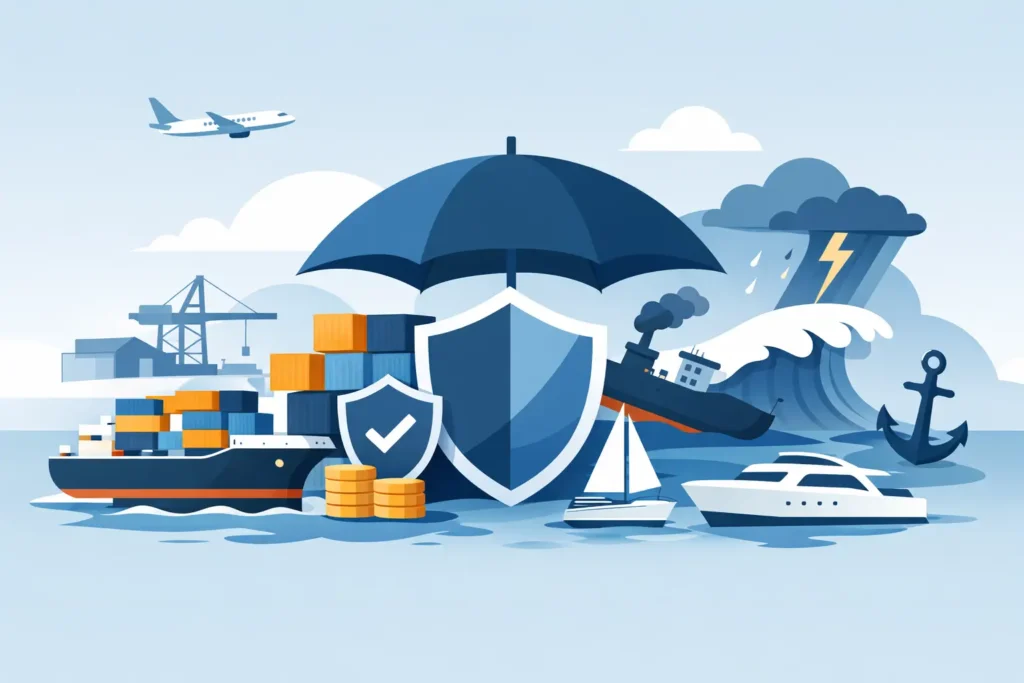
A shipment can leave the supplier in perfect condition and still arrive with a serious problem. Containers get exposed to rough handling, water ingress, theft, port congestion, and weather-related delays. That is why marine insurance coverage matters for importers, exporters, and supply chain teams moving cargo across India, the UAE, and global trade lanes.
Many businesses assume their goods are protected simply because they booked freight with a carrier or a freight forwarder. In practice, carrier liability is often limited and may not come close to the actual value of the cargo. If a high-value shipment is damaged in transit, the gap between what you lost and what you recover can be significant.
What marine insurance coverage means in real shipping terms
Marine insurance coverage is designed to protect goods while they are moving through the supply chain, whether by sea, air, road, or a multimodal route connected to international trade. Despite the name, it is not limited to cargo floating on a vessel. It can apply from warehouse to warehouse, depending on the policy terms.
For businesses, this matters because cargo risk does not begin only at the port. Damage can happen during stuffing, inland transport, transshipment, storage before export, unloading at destination, or final delivery. A policy that matches the actual route and handling stages is often more useful than a basic policy that only responds to narrow events.
The practical question is not whether insurance exists. It is whether the policy reflects how your cargo really moves.
What marine insurance coverage usually includes
Most marine cargo policies are built around physical loss or damage caused by external events during transit. That can include accidents during loading and unloading, rough weather, vessel grounding, fire, collision, overturning of trucks, theft in some circumstances, and non-delivery of entire packages.
For many shippers, all-risk coverage is the preferred option because it offers broader protection than named-perils coverage. But all-risk does not mean every possible loss is covered. It generally means all fortuitous external losses are covered unless specifically excluded.
A broader policy may also respond to general average, which is a major issue in ocean freight. If a vessel owner sacrifices part of the voyage interests to save the ship and cargo, all cargo owners can be asked to contribute financially. Without the right insurance, that contribution can become an unexpected cost before cargo is released.
Some policies also include coverage for sue and labor expenses, which are reasonable costs incurred to protect insured cargo from further loss. For companies shipping high-value or time-sensitive goods, that detail can make a real difference during a claims event.
What is often excluded from marine insurance coverage
This is where misunderstandings happen. Marine insurance coverage does not automatically respond to every problem in transit. Common exclusions often include improper packing, inherent vice, ordinary leakage or wear and tear, delay alone, loss caused by insolvency of the carrier, and willful misconduct.
That means if cargo spoils because it was packed incorrectly, or if sensitive goods were not protected against moisture in a known high-humidity route, the insurer may challenge the claim. The same applies when goods arrive late but are not physically damaged. Commercial loss from delay can be painful, but it is not always an insured event.
There are also commodity-specific considerations. Used machinery, temperature-sensitive products, vehicles, project cargo, and fragile goods may require special declarations, inspections, or endorsements. If the shipment details were understated at the time of policy issue, claim recovery can become more difficult.
Why carrier liability is not enough
A common mistake is relying only on the shipping line, airline, or trucking company for protection. Carriers operate under liability conventions and contract terms that usually limit how much they pay. Their responsibility may be based on package count, shipping weight, or defined legal caps rather than cargo invoice value.
For low-value cargo, that may be tolerable. For electronics, machinery, auto parts, project materials, or luxury vehicles, it usually is not. If a container of specialized equipment worth $150,000 suffers major damage, the carrier’s maximum liability could be only a fraction of that amount.
That is why businesses with regular trade flows treat insurance as part of risk management, not as an optional add-on. Freight gets cargo from origin to destination. Insurance protects the financial side when the movement does not go as planned.
Choosing the right marine insurance coverage for your cargo
The right policy depends on what you ship, how often you ship, where the cargo moves, and how much risk your business can absorb. A one-time shipper may use a single shipment policy. A company moving goods regularly between suppliers, ports, and customer locations may be better served by an open policy that covers multiple shipments over time.
Cargo value is only one factor. Packaging method, handling frequency, transshipment points, final delivery conditions, and seasonality also matter. Monsoon periods, congested ports, and routes with multiple handoffs create a different risk profile than direct, well-controlled shipments.
For example, an LCL shipment can carry higher exposure to handling-related damage because cargo is consolidated and deconsolidated more than a full container load. Break bulk cargo and oversized project shipments introduce their own risks tied to lifting, securing, and route planning. Vehicle shipping can require coverage that reflects both transit exposure and pre-shipment condition reporting.
A good logistics partner will ask detailed questions before arranging insurance. That is a good sign. The more accurately the shipment is declared, the more dependable the coverage tends to be when a claim arises.
Marine insurance coverage and Incoterms
Insurance responsibility is often linked to the Incoterm used in the sales contract. Under CIF or CIP, the seller is generally required to arrange insurance, though the scope may only meet the minimum standard unless the contract says otherwise. Under FOB, EXW, or FCA, the buyer may need to arrange protection once the risk transfers.
This is where operational teams and procurement teams need to stay aligned. The party handling freight is not always the party carrying the cargo risk. If that handoff is misunderstood, goods can move under the assumption of coverage when no effective policy is actually in place.
For companies trading between India, the UAE, and multiple international markets, this point deserves close attention. Cross-border movements often involve several service providers, customs stages, and inland legs. Insurance should reflect the real transfer of risk, not just the headline shipping term on the invoice.
What to do when cargo damage happens
Claims are easier to manage when the response is fast and documented. If cargo arrives damaged, the first step is to preserve evidence. That usually means taking clear photos, keeping packaging materials, noting exceptions on delivery receipts, and informing the carrier and insurer without delay.
Do not dispose of damaged goods too quickly unless safety requires it. Survey arrangements may be needed, especially for higher-value claims. Supporting documents typically include the commercial invoice, packing list, bill of lading or airway bill, insurance certificate, survey report if applicable, and correspondence showing when and how the loss was discovered.
Timing matters. Late notification can complicate recovery. So can incomplete paperwork or unclear cargo descriptions. Businesses that ship often should have an internal claims checklist so warehouse staff, receiving teams, and logistics managers all follow the same process.
A practical way to reduce insurance disputes
The easiest claim to resolve is the one supported by clear shipment controls. Accurate cargo values, proper packing, pre-shipment inspection records, seal numbers, container condition checks, and delivery exception notes all help.
It also helps to work with a freight partner that understands both transport execution and insurance coordination. That becomes especially useful on mixed-mode shipments, customs-controlled cargo, vehicle transport, and specialized project loads. Mass Freight Forwarding supports these types of movements with a practical understanding of route risk, cargo handling, and documentation requirements across India, the UAE, and international lanes.
Marine insurance should not be treated as a checkbox at the booking stage. It is a financial safeguard built around the real conditions your cargo will face. When the policy matches the shipment, the route, and the value at risk, it becomes one of the most useful protections in your supply chain. Before your next shipment moves, make sure the coverage is built for the cargo you actually have, not the cargo someone assumed you were sending.
