
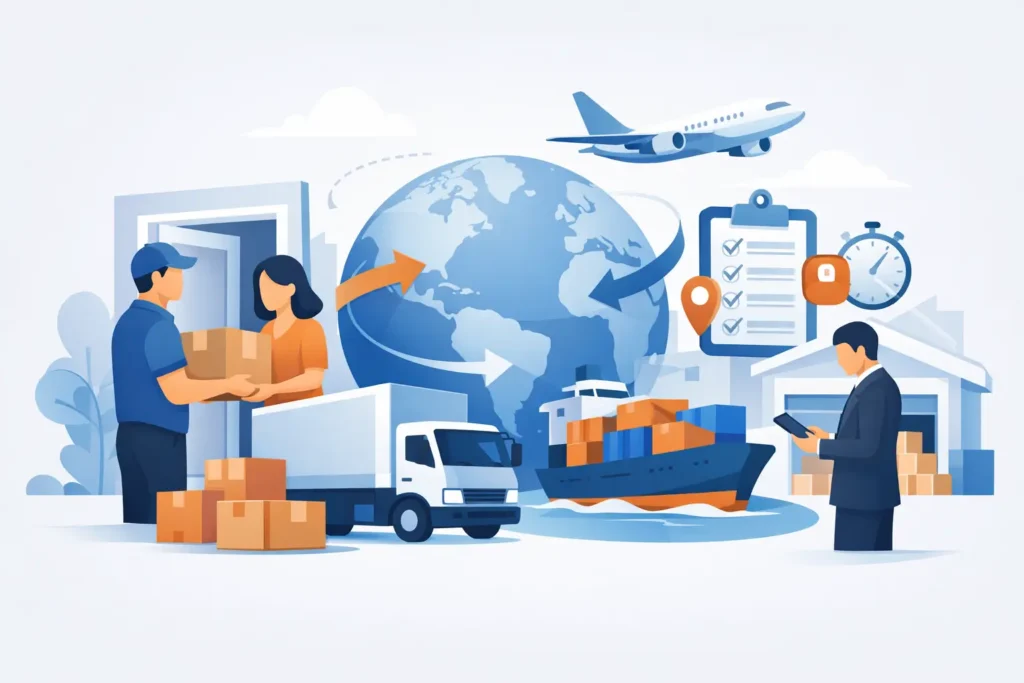
A shipment looks simple on paper until the handoffs begin. One party collects the cargo, another moves it to port, a third handles customs, and someone else manages final delivery. That is where delays, cost overruns, and poor visibility usually start. For importers, exporters, and supply chain teams, the best door to door shipping is not just about getting cargo from point A to point B. It is about reducing risk across the full move.
Door-to-door shipping means one logistics provider manages the shipment from pickup at origin to delivery at the consignee’s location. That can include packing support, inland transport, export documentation, freight booking, customs clearance, destination handling, and last-mile delivery. The value is not only convenience. It is control. When one team owns the process, accountability is clearer and coordination is tighter.
What the best door to door shipping really includes
A strong door-to-door service is built on more than transport. It should begin with pickup planning that matches the cargo type, volume, and loading requirements. A palletized air shipment, an LCL ocean shipment, and a luxury vehicle all need different handling from the start.
The next layer is freight execution. Depending on your cargo and timeline, that may involve air freight for speed, ocean freight for cost efficiency, or land freight for regional movement. The best providers do not force every shipment into one mode. They recommend the route and service level that fit the commercial need.
Customs handling is another major piece. Many shipments do not fail because of transport problems. They fail because documents are incomplete, tariff classifications are wrong, or local clearance rules are not understood early enough. Door-to-door shipping only works properly when customs is treated as part of the transport plan, not as a separate task to fix later.
Final delivery matters just as much as the main leg. A shipment arriving at destination is not the same as a shipment delivered. Warehousing, deconsolidation, appointment scheduling, and local transport all affect whether cargo reaches the receiver on time and in good condition.
How to evaluate the best door to door shipping provider
The right provider should be judged by execution, not by broad promises. A low rate can look attractive until storage charges, customs delays, and delivery failures erase the savings.
Start with route strength. If your business ships between India and the UAE, or uses either market as a supply chain hub, local operational knowledge matters. A forwarder that understands port handling, customs processes, and inland delivery conditions in both countries will usually prevent issues before they become expensive.
Next, look at service range. Door-to-door shipping works best when the provider can manage different cargo types under one operational structure. Standard commercial freight is one thing. Vehicles, project cargo, oversized loads, LCL groupage, and urgent air shipments require different planning and compliance standards. If your provider can only handle one narrow service type, coordination gaps tend to appear as soon as your shipping profile changes.
Visibility is another practical test. You should know who is handling the cargo, what milestone has been completed, and what remains before delivery. That does not always mean a sophisticated dashboard. In many cases, reliable shipment updates and responsive operations teams are more useful than technology that looks impressive but gives limited real-time clarity.
Then there is problem-solving ability. Every experienced shipper knows that disruptions happen. Flights roll, vessels are delayed, customs inspections occur, and consignee schedules change. The difference between an average provider and the best door to door shipping partner is how they respond when the plan shifts. Do they offer alternatives quickly? Do they communicate clearly? Do they protect delivery commitments where possible and explain trade-offs where not?
Cost matters, but the cheapest option is rarely the best
Door-to-door shipping should be cost-effective, but cost-effective is not the same as cheapest. A lower freight quote may exclude destination charges, customs coordination, insurance, or delivery handling. Once those are added back in, the total landed cost can be much higher than expected.
A better approach is to compare total scope. Ask what is included from pickup to delivery, what assumptions are built into the quote, and where additional charges might apply. This is especially important for shipments involving bonded cargo, special handling, oversized pieces, vehicles, or urgent deadlines.
Transit time also affects cost in ways buyers often overlook. If a cheaper option adds days or weeks to delivery, you may take on higher inventory carrying costs, production disruption, or customer penalties. For many commercial shipments, the right service is the one that balances freight spend with business continuity.
Best door to door shipping for India and UAE trade lanes
India and the UAE are active trade markets with varied cargo profiles, from industrial goods and retail inventory to machinery, automotive shipments, and project materials. Door-to-door service on these lanes requires both international freight capability and local execution.
For exporters from India, the main concerns often include export documentation, customs accuracy, port coordination, and destination delivery timing. For importers into India, compliance planning and inland movement can be equally critical. In the UAE, shippers often need speed, flexibility, and dependable customs support for cargo moving through airports, seaports, and free zones.
The best door to door shipping solution on these routes depends on the shipment itself. Air freight may suit high-value or time-sensitive goods. Ocean freight may be a better fit for larger volumes or cost-controlled replenishment. LCL groupage can help smaller businesses avoid paying for unused container space, though it may add handling time compared with full container moves. For vehicles or oversized cargo, specialized loading, securing, and handling become central to the plan.
This is where an experienced freight forwarder adds value. A provider with operations across India and the UAE can align pickup, freight booking, customs clearance, and final delivery under one process. That reduces fragmentation and gives businesses a more stable shipping model.
Common mistakes when choosing door-to-door service
One common mistake is treating all cargo the same. General merchandise, electronics, fragile equipment, and automobiles do not move under the same risk profile. If your provider does not ask detailed questions about dimensions, packaging, cargo value, and destination requirements, the quote may not reflect the real move.
Another mistake is waiting too long to address customs and documentation. Commercial invoices, packing lists, certificates, import permits, and classification details should be checked before the shipment moves, not after it reaches the border.
Some shippers also underestimate the final mile. Delivery access restrictions, unloading needs, and consignee appointment windows can all affect transit. A shipment can arrive in the destination country on time and still miss the actual delivery target if these details are not managed early.
Insurance is often overlooked as well. Marine cargo insurance is not a formality. It is part of sensible risk control, especially for international moves involving high-value cargo, transshipment points, or specialized handling.
What a reliable provider should ask you first
A capable logistics partner usually starts with the basics, but they should quickly move beyond them. They need to know the cargo type, dimensions, weight, origin, destination, required delivery window, and whether the shipment is commercial or personal. They should also ask about packaging condition, customs documents, commodity restrictions, and any special handling needs.
Those questions are a good sign. They show the provider is building an operational plan rather than giving a generic rate. Companies like Mass Freight Forwarding typically approach door-to-door cargo in this way because execution depends on accurate planning from the first conversation.
Choosing the right service for your business
If your business ships frequently, consistency may matter more than chasing the lowest rate on each load. A provider that understands your products, paperwork, routing preferences, and delivery expectations can reduce friction across repeated shipments.
If your cargo is occasional but high value, a more hands-on service may be worth the premium. If you are managing project cargo or automotive shipments, specialized expertise is not optional. And if your supply chain depends on India-UAE movements, local customs and transport experience should be high on your list.
The best door to door shipping is the service that fits your cargo, your timeline, and your risk tolerance – while giving you one accountable partner from pickup through delivery. When that fit is right, shipping becomes less of a daily concern and more of a dependable part of your operation.
The smartest shipping decisions usually come from asking one simple question early: who is responsible for the full journey, not just one leg of it?
