
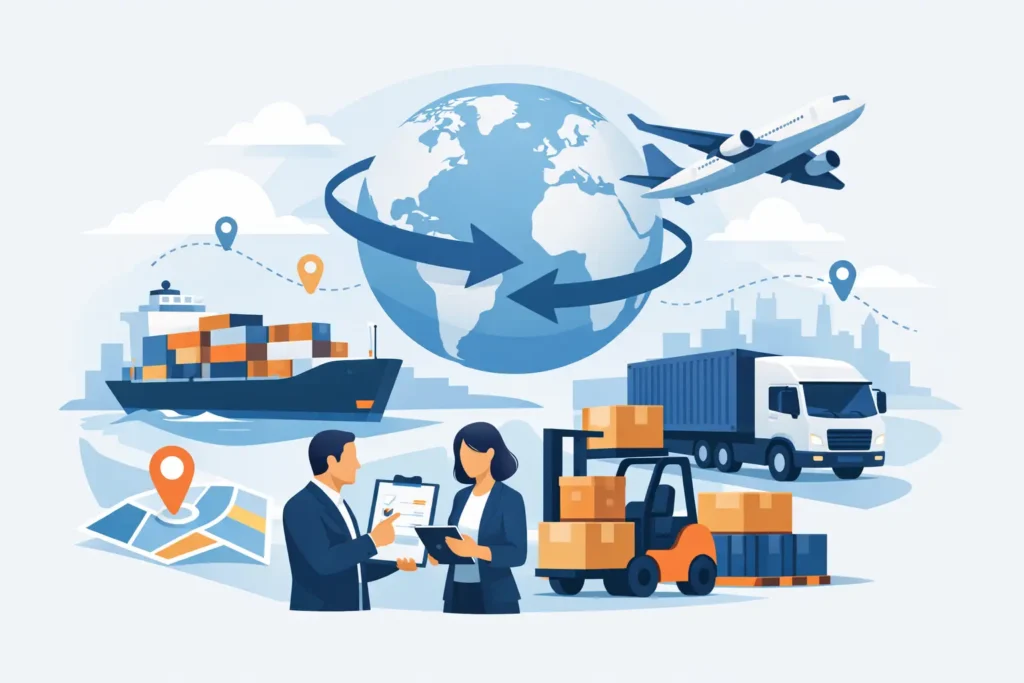
A late shipment rarely starts with the vessel or aircraft. More often, it starts with a missed document, a poor handoff, unclear Incoterms, or a forwarder that looked competitive on price but could not manage the shipment once it crossed a border. If you are looking for the best international freight forwarder, the real question is not who offers the lowest quote. It is who can move your cargo reliably, clear it correctly, and solve problems before they become delays.
For importers, exporters, and supply chain teams moving cargo to and from India, the UAE, and global markets, that distinction matters. Freight forwarding is not just transport booking. It is route planning, carrier coordination, customs support, cargo handling, risk management, and communication across multiple parties. The wrong partner creates friction at every step. The right one reduces cost, protects timelines, and gives you confidence in every shipment.
What the best international freight forwarder actually does
A freight forwarder sits at the operational center of your shipment. That includes selecting the right mode of transport, consolidating cargo when appropriate, arranging pickup and delivery, managing export and import documentation, coordinating customs clearance, and tracking movement from origin to destination.
The best international freight forwarder does more than execute standard bookings. It understands where shipments usually fail and puts controls in place early. That may mean checking commercial invoices before cargo is loaded, advising whether LCL or FCL makes more sense, planning around port congestion, or recommending marine insurance for higher-value goods.
This is especially important on trade lanes that involve detailed customs procedures or multiple transport legs. India and the UAE are high-opportunity markets, but they also demand operational accuracy. A forwarder with local knowledge in both markets can help avoid delays tied to documentation mismatches, clearance issues, and last-mile coordination gaps.
Price matters, but it should not be your first filter
Many companies begin by comparing rates. That is understandable, but freight quotes are only useful when you know what is included and what is not. A low rate can hide expensive problems later, such as storage charges, port demurrage, relabeling, customs corrections, or weak communication when schedules change.
The best international freight forwarder is not always the cheapest. It is the one that gives you a clear cost structure and helps you avoid preventable charges. That may include advising on packing, shipment timing, documentation, cargo classification, and the most efficient shipping mode for the goods you are moving.
There are trade-offs. Air freight reduces transit time but raises landed cost. Ocean freight improves economy but may affect inventory planning. Groupage helps smaller shipments move cost-effectively, but it may not fit urgent or sensitive cargo. A dependable forwarder explains those trade-offs in business terms, not just logistics terms.
Signs you are working with the right freight forwarding partner
A strong forwarder is easy to recognize once you know what to look for. First, they ask operational questions before they quote. They want to know the cargo type, dimensions, origin, destination, required timeline, packaging, duty implications, and any special handling needs. That signals they are building a workable shipping plan, not sending a generic rate.
Second, they understand customs as part of the transport process, not as a separate afterthought. Cross-border cargo can stall for reasons that have nothing to do with transit. Incorrect HS classification, invoice inconsistencies, missing approvals, or incomplete packing lists can create serious delays. A capable forwarder spots these issues early.
Third, they can manage different cargo profiles. Standard commercial freight is one thing. Vehicles, oversized cargo, project shipments, break bulk, and time-sensitive goods require a different level of planning. The best international freight forwarder should be able to adjust the solution to the cargo, not force every shipment into the same model.
Finally, communication should be proactive. You should not have to chase updates on milestones, exceptions, or revised ETAs. Good forwarding support means visibility, accountability, and quick action when plans change.
Why India-UAE expertise can make a measurable difference
For businesses trading between India and the UAE, route familiarity matters. These lanes move a wide range of cargo, from general merchandise and industrial goods to automotive units, machinery, retail inventory, and project materials. Documentation standards, customs expectations, and handling needs vary by cargo type and by shipment structure.
A forwarder with experience across both India and the UAE can coordinate the shipment with fewer blind spots. That includes export formalities at origin, import clearance at destination, consolidation planning, transit mode selection, and delivery scheduling. It also helps when cargo needs added services such as warehousing, cargo lashing, marine insurance, or door-to-door movement.
This is where many businesses save time without realizing it. The shipment itself may only be one part of the challenge. The larger issue is managing all the dependencies around it. A forwarder that already understands the lane can shorten decision-making and reduce avoidable risk.
Matching the service to the shipment
The best international freight forwarder will not recommend the same service for every move. The right setup depends on your cargo, budget, urgency, and delivery requirements.
Air freight is often the right fit for urgent shipments, spare parts, high-value goods, or products with tight selling windows. Ocean freight is usually better for larger volumes, cost-sensitive cargo, and regular replenishment cycles. Land freight becomes critical when regional distribution or final delivery is part of the plan.
LCL groupage works well for smaller loads that do not justify a full container. FCL is often more efficient for larger shipments or goods that need more control in transit. For vehicles, RORO and containerized options each have advantages depending on destination, value, and handling preference. For oversized or heavy cargo, project logistics and break bulk planning become essential.
A practical forwarder should explain why a service fits, where the risks are, and what operational steps are required on both sides of the shipment.
Questions worth asking before you appoint a forwarder
Before choosing a partner, ask how they handle delays, documentation checks, customs coordination, and shipment updates. Ask whether they support door-to-door service, marine insurance, warehousing, or specialized cargo handling if your business needs them. Ask who manages the shipment once booked and how escalation works if something changes mid-transit.
You should also ask for examples of shipments similar to yours. Experience with your route is useful. Experience with your cargo is even more valuable. A company moving retail cartons every day may not be the right partner for machinery, vehicle shipping, or project cargo.
One more practical point: evaluate responsiveness during the sales stage. If communication is slow before the booking, it rarely improves once the cargo is moving.
Choosing for the long term, not just the next shipment
The best international freight forwarder should help your business beyond one booking. Over time, a good partner identifies recurring cost leaks, improves transit planning, supports procurement decisions, and creates a more stable shipping process. That matters even more if you import or export regularly, manage seasonal inventory, or operate across more than one origin market.
For many businesses, the best result is not simply a shipment that arrives. It is a shipping program that becomes more predictable over time. Fewer surprises. Better landed cost control. Faster issue resolution. Stronger alignment between logistics and commercial goals.
Mass Freight Forwarding works with that mindset across India, the UAE, and global trade lanes, supporting businesses that need dependable cargo movement, customs coordination, and tailored logistics execution.
When you choose a freight forwarder, you are not just buying transport space. You are choosing how much risk, delay, and operational friction your business is willing to carry. The right partner helps you carry a lot less of it.
