
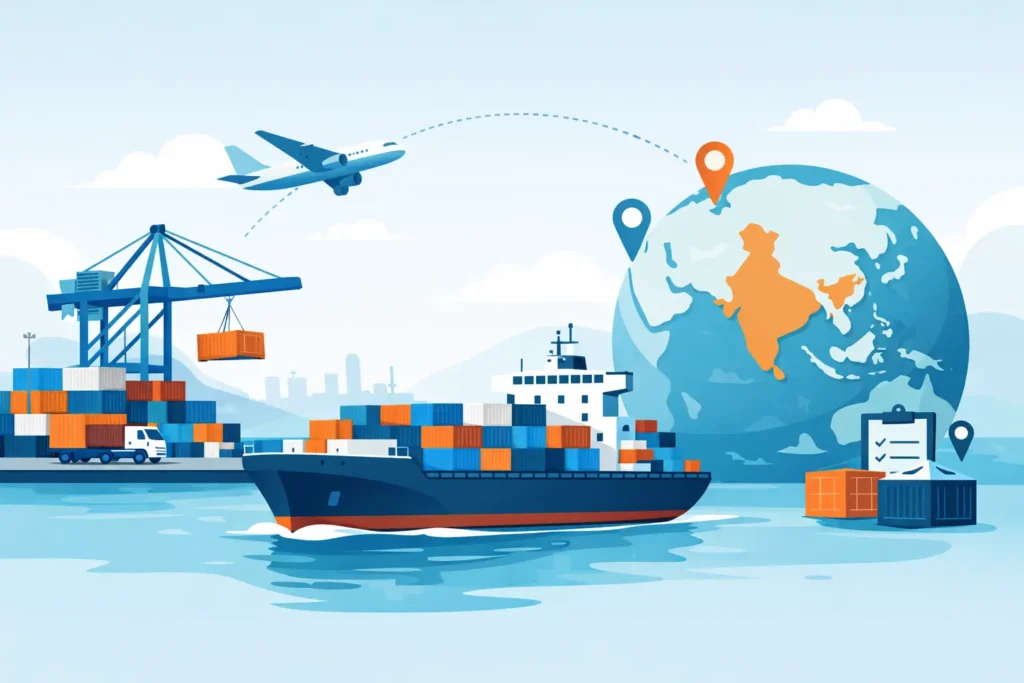
If you are comparing the best ocean freight forwarding companies in India, the fastest way to get it wrong is to focus only on price. A low ocean quote can look attractive until transit delays, port congestion, weak customs coordination, or poor shipment visibility start affecting inventory, customer commitments, and landed cost. For importers, exporters, and supply chain managers, the right forwarder is the one that can move cargo reliably under real operating pressure.
India is not a simple ocean freight market. It serves high-volume export sectors, complex import flows, multiple major ports, and a wide mix of cargo types ranging from standard containerized goods to oversized machinery, automotive cargo, chemicals, and project shipments. That means the best partner for one shipper may not be the best fit for another. The real question is not who is biggest. It is who is right for your cargo profile, trade lane, and service expectations.
What makes the best ocean freight forwarding companies in India stand out
A capable freight forwarder does more than book vessel space. It coordinates the full movement around the shipment – carrier selection, container planning, documentation, customs handling, port coordination, inland transport, exception management, and final delivery support when required. The difference between average and dependable service usually shows up when something changes at short notice.
Strong ocean freight companies in India tend to stand out in five areas. First, they have real execution strength at major gateway ports such as Nhava Sheva, Mundra, Chennai, and Kolkata, with the ability to adapt to regional port conditions. Second, they understand documentation and customs procedures well enough to prevent avoidable holds. Third, they offer practical routing advice, not just the cheapest option on paper. Fourth, they can support different cargo formats such as FCL, LCL, RORO, break bulk, and project cargo. Fifth, they communicate clearly when schedules shift.
That last point matters more than many buyers expect. A delayed vessel is one problem. A delayed vessel with no timely update becomes a planning failure across procurement, warehousing, and customer delivery.
How to evaluate ocean freight forwarding companies in India
The best buying process is usually operational, not promotional. Instead of asking which forwarder is most famous, ask how the company handles the details that affect cost and control.
Port and trade lane coverage
Some forwarders are strong across India. Others are highly effective only from selected ports or for certain export regions. If your cargo moves regularly from western India to the Gulf, East Africa, Europe, or the US, ask about direct experience on those lanes. If your shipments originate inland, ask how the company manages container positioning, factory pickups, and lead times before port cutoffs.
Trade lane familiarity often affects routing quality. A forwarder with direct working knowledge of India-UAE cargo flows, for example, may be better positioned to advise on sailing frequency, documentation timing, transshipment risk, and customs coordination at both ends.
Customs and compliance support
Ocean freight performance is closely tied to customs execution. Even when freight rates are competitive, poor handling of HS codes, invoice values, packing declarations, certificate requirements, or port documentation can create expensive delays. This is especially relevant for regulated goods, automotive cargo, machinery, chemicals, or mixed consignments.
A reliable partner should be able to explain the documentation process clearly and identify likely compliance issues before cargo reaches the port. For many shippers, this matters just as much as freight booking.
Cargo specialization
Not every forwarder is equipped for every shipment type. Standard FCL exports are one thing. High-value vehicles, heavy equipment, over-dimensional cargo, or fragile project materials are another. If your shipment needs lashing, marine insurance, special handling, RORO coordination, or break bulk planning, ask direct questions about previous cargo of a similar type.
General capability claims are easy to make. Relevant execution history is more useful.
Visibility and communication
Many logistics teams can tolerate a disruption if they know about it early enough to adjust. They struggle when updates are late, fragmented, or passed through too many intermediaries. Good forwarders provide realistic transit expectations, milestone updates, and one accountable point of contact who can actually resolve issues.
This is particularly valuable for SMEs and growing exporters that do not have a large internal logistics team. It is also essential for companies managing supply chains across India and the UAE, where shipment timing can affect customs schedules, warehousing plans, and downstream distribution.
The types of companies you will find in the Indian market
When searching for the best ocean freight forwarding companies in India, you will generally come across three broad categories.
Large multinational forwarders offer broad networks, standardized systems, and strong carrier relationships. They are often a good fit for multinational contracts, high shipment volumes, and companies that want centralized procurement across many countries. The trade-off is that smaller or more specialized customers may not always get flexible service.
Mid-sized regional and international forwarders often provide a better balance between reach and responsiveness. These companies can be especially effective for businesses that need direct handling, customized routing, or support on trade lanes where local execution matters. They may also be better at tailoring solutions for mixed cargo profiles or urgent exceptions.
Niche specialists focus on specific cargo types or corridors, such as automotive logistics, project cargo, or Gulf trade. They can be the right choice when your shipments are not routine. The trade-off is that they may not offer the same breadth across unrelated services or geographies.
There is no single best category. It depends on whether your main priority is scale, flexibility, specialization, or integrated support.
What importers and exporters should ask before choosing a forwarder
A short qualification call can tell you more than a polished brochure. Ask how the company handles port congestion, rolled cargo, customs queries, detention and demurrage risk, and documentation corrections after booking. Ask whether they can support both origin and destination coordination. Ask who manages exceptions and how quickly updates are shared.
Also ask about services around the ocean movement. Many shippers do better with a forwarder that can combine sea freight with customs clearance, inland transport, warehousing, insurance, and door delivery support. Fewer handoffs usually mean fewer gaps.
If your business ships between India and the UAE, this becomes even more important. A provider with operational capability in both markets can reduce friction across documentation, handover timing, and destination handling. That joined-up model often saves more money than a lower freight rate from a provider working through too many third parties.
Why service fit matters more than rankings
Search results and directory lists often try to rank freight forwarders as if they were interchangeable. They are not. One company may be excellent for high-volume FCL exports from Mundra to Europe. Another may be stronger for LCL consolidation to the Middle East. Another may be better equipped for break bulk machinery, RORO vehicle shipments, or time-sensitive import coordination.
That is why buyers should be cautious with generic “top company” lists. A better approach is to compare operational fit. Look at your shipment frequency, cargo value, documentation complexity, origin point, destination market, and need for destination-side support. Then shortlist providers that match those realities.
For businesses moving cargo through India and the UAE, this is where a company such as Mass Freight Forwarding can make commercial sense – especially when the requirement is not just ocean transport, but coordinated execution across customs, inland movement, specialized cargo handling, and door-to-door support.
Signs you have found the right partner
The right forwarder usually sounds less like a salesperson and more like an operator. They ask precise questions about cargo dimensions, commodity type, pickup readiness, port preferences, destination requirements, and delivery deadlines. They discuss risks openly. They explain options clearly. And they avoid promising transit certainty where none exists.
That kind of honesty is useful. Ocean freight always involves variables – vessel schedules, blank sailings, port congestion, customs review, inland delays, weather, and carrier equipment availability. A dependable forwarder does not pretend those risks disappear. They help you plan around them.
If a company can combine practical routing advice, responsive communication, customs understanding, and support for the cargo types you actually ship, you are likely looking at one of the better ocean freight forwarding partners in India, whether or not it is the largest name in the market.
The best decision is rarely about choosing the cheapest quote or the most recognized brand. It is about choosing a forwarder that can protect your timelines, your cargo, and your customer commitments when shipping conditions are less than ideal.
