
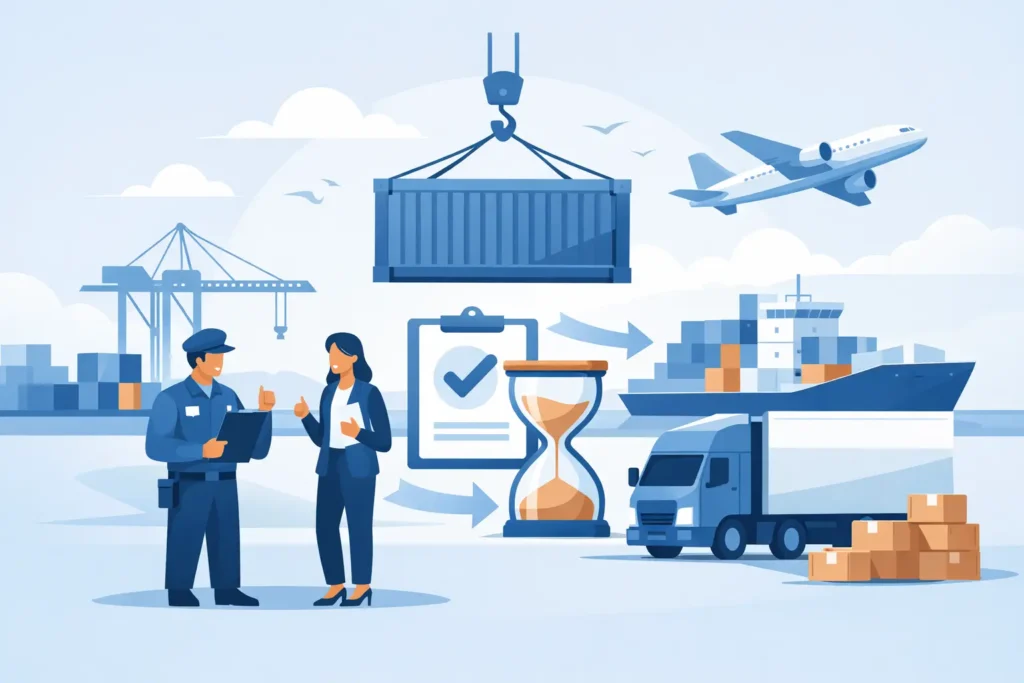
A shipment can be packed correctly, priced correctly, and booked on time – and still miss its delivery window because of customs clearance. For importers, exporters, and supply chain teams, that is often where the real pressure starts. A document mismatch, the wrong HS code, or a missing permit can turn a routine move into storage charges, missed production schedules, and unhappy customers.
Customs is not just a checkpoint between origin and destination. It is a control point for valuation, classification, duties, taxes, compliance, and cargo release. When cargo moves to or from markets such as India and the UAE, customs requirements can be straightforward for one shipment and far more detailed for the next, depending on cargo type, origin, end use, and the documents submitted.
That is why customs planning needs to start before cargo departs, not after it arrives.
What customs clearance really involves
Many shippers think of customs clearance as filing paperwork at destination. In practice, it is a wider process that starts with shipment preparation. Commercial invoices, packing lists, product descriptions, country of origin details, freight documents, permits, and tax information all need to align. Customs authorities use those details to decide whether the cargo can be released, whether duties and taxes are correct, and whether any inspection or additional review is needed.
The exact process varies by country, port, airport, and commodity. A standard pallet of general goods will not be handled the same way as automotive cargo, oversized machinery, electronics, food items, or regulated products. In some cases, customs release is quick because the documentation is complete and the cargo profile is low risk. In others, the shipment may be selected for examination, valuation review, or permit verification.
For businesses moving cargo regularly, customs is less about one isolated transaction and more about consistency. The goal is to build a process that reduces surprises over time.
Why customs clearance delays happen
Most customs delays are not random. They usually come from gaps that were built into the shipment long before arrival.
A common issue is incomplete or inconsistent documentation. If the invoice description is vague, the packing list does not match the cargo, or the consignee details differ across documents, clearance slows down. Customs officials need enough detail to understand what the goods are, how they should be classified, and what charges apply.
Classification errors are another major cause. HS codes affect duty rates, admissibility, and regulatory treatment. A product classified under the wrong code may trigger a dispute over duties or force a revision before release. That can be expensive, especially when storage, demurrage, or production delays are added to the direct customs cost.
Valuation is also sensitive. If the declared value does not align with the goods, terms of sale, or freight cost structure, customs may ask for clarification. This does not always mean the value is wrong. It may simply mean the declaration does not give customs enough confidence to release the cargo without further review.
Then there is the issue of permits and restricted goods. Some cargo types require prior approvals, certificates, or special handling. If those are not arranged in advance, the shipment can be stopped even if every other document is ready.
Customs clearance in India and the UAE
For companies trading through India and the UAE, customs clearance needs local knowledge and operational discipline. Both markets are major trade hubs, but each has its own procedures, systems, and practical expectations.
In India, customs handling often requires careful attention to product classification, import documentation, tax structure, and any commodity-specific requirements. Cargo may move efficiently when the paperwork is aligned, but discrepancies can quickly create hold-ups. Importers also need to pay close attention to how goods are described, valued, and documented across all shipment records.
In the UAE, customs processes are generally efficient, especially when filings are prepared correctly and cargo moves through established trade channels. Still, speed depends on accuracy. Free zone movements, mainland delivery requirements, re-export transactions, and specific commodity controls can all affect how a shipment should be declared.
This is where experienced freight and clearance support matters. A shipment moving between India and the UAE may look simple on the surface, but route structure, cargo type, and final delivery model can change the customs approach significantly.
How to prepare shipments for faster customs clearance
The best way to improve customs clearance is to treat it as part of shipment planning, not as an admin task at the end.
Start with product data. Every item being shipped should have a clear and commercially accurate description. “Parts,” “equipment,” or “goods” is rarely enough. Customs needs to know what the product is, what it is made of, and sometimes what it is used for. Better descriptions reduce questions and support correct classification.
Next, review your commercial documents before cargo dispatch. The invoice, packing list, transport document, and any certificate or permit should tell the same story. If quantities, values, weights, or consignee details conflict, customs may stop the shipment until the inconsistency is resolved.
Classification should never be guessed. If your cargo moves frequently, it makes sense to establish internal consistency around HS codes and review them when products change. The same applies to origin information, especially where trade benefits, duties, or restrictions may depend on source country.
Timing matters too. Some shippers focus only on freight departure schedules and forget the clearance timeline on arrival. If a permit, authorization, or payment process is needed before release, that work should be completed as early as possible. Cargo that lands before the paperwork is ready often becomes costly cargo.
The trade-off between speed and compliance
Every importer wants cargo released quickly. Every exporter wants the shipment to move without disruption. But speed without compliance is a short-term win that can become a larger problem later.
For example, under-declaring value may appear to reduce landed cost, but it increases exposure to penalties, reassessment, and shipment holds. Using a broad product description may save time during invoice preparation, but it can create more customs questions at destination. The same applies to trying to force one classification across similar products that are not truly identical.
The better approach is controlled speed. That means building documentation that is complete enough to support release, while also standing up to audit or review. It may take more effort at the start, but it usually saves far more time and cost across repeated shipments.
Where a freight forwarder adds value
A capable freight forwarder does more than book transport. In customs clearance, the right logistics partner helps reduce avoidable risk before the shipment reaches the border.
That support can include reviewing commercial documents, identifying likely clearance issues, coordinating with brokers and local agents, advising on shipment structure, and aligning transport plans with customs timelines. For businesses shipping between India, the UAE, and other global markets, this is especially useful when cargo profiles vary from standard commercial goods to vehicles, project cargo, or urgent air freight.
It also helps when one provider can see the entire movement. Customs is closely connected to mode of transport, final delivery terms, storage planning, and destination handling. If those pieces are managed separately without coordination, delays become more likely.
Mass Freight Forwarding supports this kind of end-to-end handling across India, the UAE, and wider trade lanes, which is often where businesses gain the most control – not from moving faster at one stage, but from reducing friction across the whole shipment cycle.
When customs clearance needs a different approach
Not every shipment should be handled the same way. A recurring importer with stable SKUs and predictable documentation needs a different clearance strategy than a company shipping one-time project cargo. A car shipment, an LCL consolidation, and an urgent air freight consignment each bring different customs considerations.
That is why process design matters. High-volume importers may need document standardization and pre-clearance planning. Specialized cargo shippers may need permit coordination and closer inspection management. Businesses entering a new market may need more hands-on guidance because the biggest risk is often not transport itself, but making assumptions based on another country’s customs rules.
Good customs handling is not just about reacting to holds. It is about matching the clearance process to the cargo and trade lane before problems appear.
A practical mindset for customs clearance
If you want fewer delays, lower extra charges, and more predictable delivery performance, look at customs clearance as a supply chain function, not a border event. Build accurate product data. Keep shipping documents consistent. Confirm permits early. Align freight planning with customs timing. And work with logistics partners who understand how India, the UAE, and international trade requirements connect in real operations.
The shipments that move best are usually not the simplest ones. They are the ones prepared with care long before arrival.
