
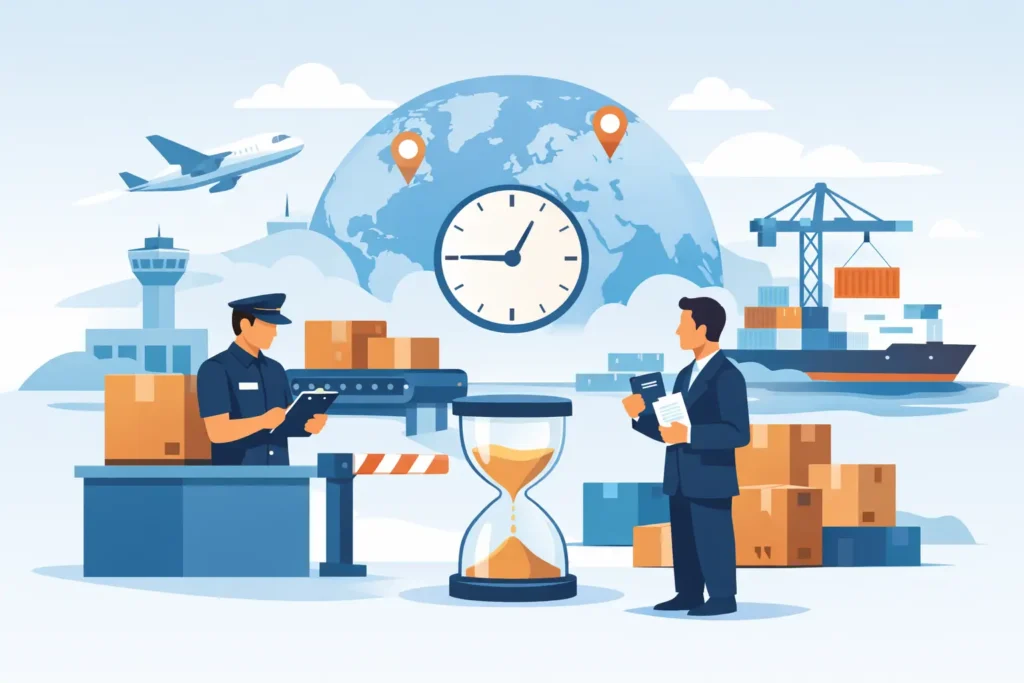
A shipment can move across oceans in days and then sit at the border because one code, one invoice detail, or one missing document needs clarification. That is why importers and exporters keep asking the same question: how long does customs take? The honest answer is that customs clearance can be very fast when paperwork is correct, but timelines can stretch when inspections, duty issues, or compliance checks come into play.
For most standard commercial shipments, customs clearance may take anywhere from a few hours to 1-3 business days. In many cases, air freight clears faster than ocean freight because shipment sizes are smaller and documents are often submitted earlier. But that is only the general range. The actual timing depends on the country, cargo type, declared value, customs workload, and whether the shipment is selected for inspection.
How long does customs take in real operations?
In day-to-day freight movement, customs clearance is not one single action. It is a process that starts when documents are prepared and often continues through review, duty assessment, payment, release, and sometimes inspection. If all documents are complete and the cargo is low-risk, clearance can happen the same day or the next business day.
For air cargo, many shipments are released within 24-48 hours after arrival when documents are filed properly in advance. For ocean freight, the timeline is often 2-5 business days because container handling, port procedures, and shipping line documentation add extra steps. Land freight timelines can vary depending on the border, the route, and how the cargo is presented for inspection.
This is why the better question is not only how long customs takes, but what conditions make it fast or slow.
What affects customs clearance time?
The biggest factor is document accuracy. A missing commercial invoice, inconsistent product description, incorrect HS code, or mismatch between packing list and bill of lading can stop a shipment immediately. Customs authorities are checking whether the cargo matches the declaration, whether duties and taxes are correct, and whether the goods are allowed to enter.
Cargo type also matters. General consumer goods usually move more quickly than regulated items such as food products, medical devices, chemicals, electronics with certification requirements, or automotive shipments with specific import rules. High-value cargo may receive closer review. Oversized project cargo can also take longer because permits, handling coordination, and special approvals may be needed.
The destination country makes a difference as well. Customs processes in the UAE, India, the US, and other markets all have different digital systems, documentation requirements, and inspection procedures. Some trade lanes are highly efficient, while others may see congestion during peak seasons or holiday periods.
Then there is the issue of inspection. A shipment may be selected for random examination, X-ray scanning, valuation review, or physical inspection. Once that happens, the timeline becomes less predictable. A routine clearance can turn into a multi-day process even when the importer has done nothing wrong.
Typical customs timelines by shipment type
Air freight is usually the fastest option. If pre-alerts are sent early and documents are filed before arrival, customs may process the entry quickly. Standard cargo can often clear within 1-2 business days. If the shipment contains regulated goods or is flagged for examination, that can extend to 3-5 days or longer.
Ocean freight generally takes more time. Containers must be discharged, moved within the terminal, and matched with the shipping line’s release process before final delivery can happen. Even when customs itself acts quickly, port handling can add a day or two. A straightforward full container load or LCL shipment may clear in 2-5 business days, while inspections or congestion can push that further.
Courier and express parcel shipments often clear quickly because major carriers have integrated customs systems and high submission volumes. Still, parcels can be delayed by value checks, missing recipient identification, or restrictions on certain product categories.
Vehicle shipping deserves separate mention. Car imports, especially to or from markets with strict registration and compliance rules, can take longer than standard cargo. Customs is only one part of that process. Supporting approvals, ownership papers, chassis verification, and destination-specific import conditions all affect release timing.
How long does customs take in India and the UAE?
For businesses shipping to and from India and the UAE, customs timing is often manageable when the filing is handled correctly and the cargo category is understood from the start.
In the UAE, customs processes are generally efficient, especially when documents are submitted electronically and cargo details are consistent across all paperwork. Standard commercial shipments may clear within 1-2 business days, and sometimes faster. Delays usually come from document discrepancies, unpaid charges, missing permits, or inspection selection.
In India, customs timelines can also be quick for compliant cargo, but the process may take longer depending on the port, cargo category, government agency involvement, and whether supporting licenses or product-specific approvals are required. A standard shipment may clear in 1-3 business days, while more sensitive cargo can take longer if additional checks are triggered.
For importers moving freight regularly across these trade lanes, local customs knowledge matters. A forwarder that understands filing practices, commodity-specific requirements, and port-level realities can reduce avoidable delays before the cargo even arrives.
The most common reasons customs gets delayed
Most customs delays are preventable. The problem is that they often start upstream, long before the cargo reaches the border.
One common issue is vague cargo descriptions. Terms like “parts,” “samples,” or “accessories” are not always enough for classification and valuation. Customs wants a clear commercial description of what the goods actually are and how they are used.
Another issue is incorrect valuation. If customs believes the declared value is too low or does not match market expectations, it may request supporting proof. That can mean invoices, purchase orders, payment records, or manufacturer details. Until that review is complete, the shipment may not move.
Missing permits are another major cause of delay. Some goods require prior approval from customs or from another government authority. If that permit is not in place, the cargo may sit at the port or airport while the importer tries to resolve it.
There are also practical operational delays. Port congestion, system outages, public holidays, shipping line release issues, and late document handover can all affect timing even when customs is ready to clear the shipment.
How to reduce customs clearance time
The most effective way to speed up customs is to prepare before arrival. That means confirming the HS code, checking whether permits are required, making sure the invoice and packing list match exactly, and verifying that consignee details are correct.
It also helps to submit documents as early as possible. Pre-clearance can save valuable time, especially for air freight and urgent commercial cargo. If duties and taxes apply, arranging prompt payment matters. A shipment can be approved but still not released because charges have not been settled.
Working with an experienced freight forwarder or customs clearance partner can make a measurable difference. The right team does more than pass paperwork along. They review documents before filing, flag compliance risks early, coordinate with ports and carriers, and respond quickly if customs asks for clarification. For businesses shipping through India and the UAE, that local handling becomes even more valuable when regulations differ by commodity and entry point.
When should you worry about a customs delay?
If your shipment has been in customs for less than 48 hours, that is not automatically a problem. Many shipments move within that window, but some need an extra day for routine processing. Concern is more justified when the cargo remains on hold for several days without a clear reason, especially if no inspection notice or document query has been shared.
At that point, the right next step is not guesswork. It is a status check tied to the actual customs entry, document set, and cargo release conditions. Sometimes the issue is a customs query. Sometimes it is a terminal hold, carrier release delay, or missing payment. These are different problems with different fixes.
Mass Freight Forwarding supports shippers with customs handling and freight coordination across India, the UAE, and key international trade lanes, which helps reduce the handoff gaps that often slow clearance.
A more useful way to plan for customs
If your business needs firm delivery commitments, plan customs as a variable, not a fixed number. Build a normal clearance window into your transit schedule, but also leave room for exceptions such as inspections, permit checks, or seasonal backlogs. That is especially important for production inputs, retail launches, automotive movements, and project cargo where one delayed release can affect a wider timeline.
The practical answer to how long does customs take is this: simple, compliant shipments can clear very quickly, often within hours or a couple of business days, while flagged or poorly prepared shipments can take much longer. The difference usually comes down to preparation, cargo profile, and the quality of coordination behind the move.
The more predictable you want customs to be, the earlier you need the right documents, the right classification, and the right local support in place.
