
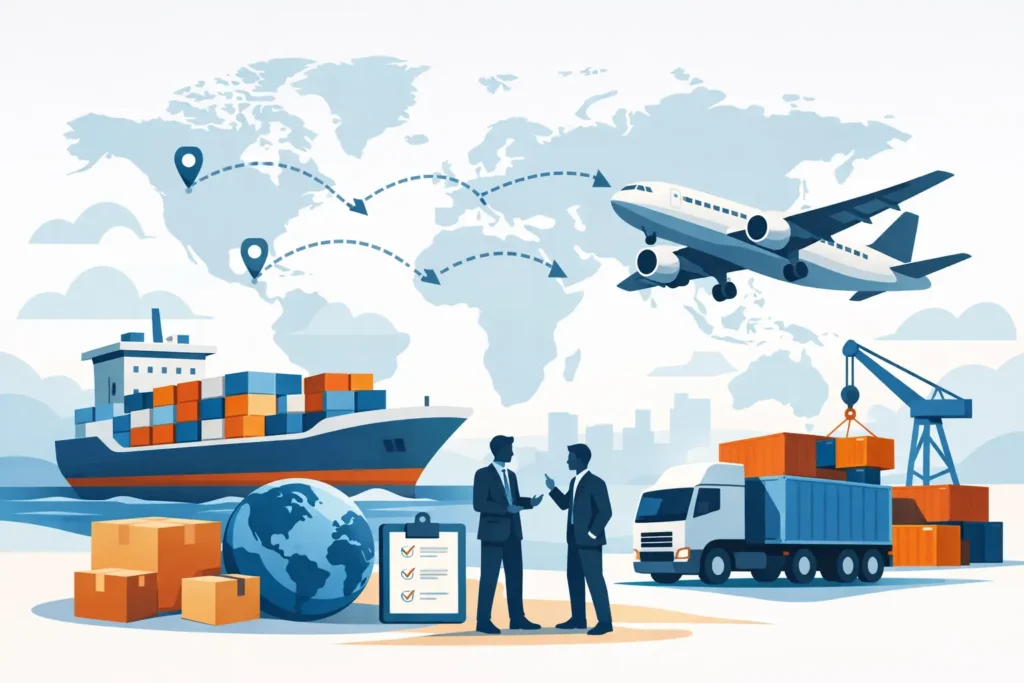
A shipment can look simple on paper and still go off track once it hits customs, misses a cut-off, or arrives with the wrong paperwork. That is why understanding how to ship cargo internationally matters long before the cargo is packed. For importers, exporters, and supply chain teams, the real job is not just moving goods from one country to another. It is moving them on time, within budget, and with fewer surprises.
How to ship cargo internationally without costly delays
The first decision is not the carrier. It is the shipment profile. Before you book anything, you need to know exactly what you are shipping, where it is going, how fast it needs to arrive, and what regulations apply at origin and destination.
A standard carton shipment from Dubai to Mumbai is very different from shipping oversized machinery from India to the UAE, or moving auto units by RORO to another market. Weight, dimensions, cargo value, packaging needs, commodity type, and delivery deadlines all affect the right shipping plan. If the cargo is hazardous, temperature-sensitive, high-value, or oversized, the planning becomes more specialized and less forgiving.
This is where many avoidable issues begin. If the shipment details are incomplete at the quotation stage, the final cost and transit plan often change later. A reliable international shipping process starts with accurate information.
Start with the right freight mode
The best shipping mode depends on urgency, volume, cargo type, and cost tolerance. There is no single right answer for every shipment.
Air freight for speed and tighter timelines
Air freight works well when transit time matters more than cost per kilogram. It is often the right fit for urgent replenishment stock, electronics, medical supplies, samples, and high-value goods. It also reduces some handling time compared with ocean shipping, although airport security and customs checks still need to be managed properly.
The trade-off is straightforward. Air freight is faster, but usually more expensive and more sensitive to chargeable weight calculations. If your cargo is bulky but not heavy, air costs can rise quickly.
Ocean freight for cost efficiency at scale
Ocean freight remains the preferred option for larger commercial shipments, heavier cargo, and supply chains that can plan ahead. Full container load works best when a shipper has enough volume to use a container efficiently or needs better control over handling. Less than container load is useful when volume is smaller and cost needs to be shared across consolidated cargo.
Ocean shipping is often more economical, but transit times are longer and cut-off planning is stricter. Port congestion, sailing changes, and customs release timing can all affect final delivery schedules.
Land freight for regional and cross-border movement
Land freight is a practical choice when the route supports road transport efficiently, especially for regional movements connected to seaports, airports, warehouses, or neighboring countries. It is also a key part of multimodal shipping when cargo moves by truck before or after air or ocean freight.
For businesses shipping to or from India and the UAE, land transport often plays an important role in door-to-door execution, even when the main leg is by sea or air.
Documents matter more than most shippers expect
If you want to know how to ship cargo internationally with fewer customs issues, start with documentation discipline. Even well-packed cargo can sit idle if the paperwork does not match the shipment.
Most international shipments require a commercial invoice, packing list, transport document, and customs declaration paperwork. Depending on the commodity and destination, you may also need a certificate of origin, import permits, export licenses, inspection certificates, or product-specific compliance documents.
The key is consistency. Product descriptions, quantities, values, HS codes, shipper and consignee details, and Incoterms should align across every document. Small mismatches can trigger inspections, penalties, or release delays.
Commodity classification deserves special attention. If the HS code is wrong, duties may be miscalculated and customs may challenge the entry. That can turn a routine shipment into a time-consuming correction process.
Understand customs before cargo moves
Customs clearance is not a formality. It is one of the main control points in international freight.
Both export and import rules matter. Some shippers focus only on destination customs and forget origin-side compliance. That creates risk from the start. You need to confirm whether the goods can legally move, whether they need approvals, and what duties, taxes, or restrictions apply in the receiving country.
This becomes especially important when shipping between regulated markets or handling cargo categories such as vehicles, chemicals, machinery, food products, or electronics. Customs requirements vary by country, and they also vary by product.
For example, a shipment entering the UAE may require different supporting documents and procedures than a shipment entering India, even if the same supplier is involved. A freight partner with customs handling capability in both markets can reduce delays because they understand how local procedures work in practice, not just on paper.
Packaging is part of the shipping strategy
International cargo moves through more handling points than domestic freight. It may pass through warehouses, terminals, ports, customs inspection areas, and final-mile delivery networks. Packaging needs to match that reality.
Cartons may be fine for lightweight consumer goods, but fragile equipment, industrial parts, and high-value items often need palletization, crating, waterproofing, or additional internal protection. Oversized and project cargo may require cargo lashing, securing plans, or route-specific loading arrangements.
Underpacking creates damage risk. Overpacking can increase dimensional charges or make cargo harder to handle. Good packaging protects the cargo without creating unnecessary cost.
Insurance also deserves attention here. Many shippers assume carrier liability will cover losses, but that coverage is often limited and may not reflect the full cargo value. Marine cargo insurance is worth considering when the goods are valuable, sensitive, or business-critical.
Cost control starts before the quote is approved
Shipping costs are rarely just freight charges. To budget accurately, you need to look at the full landed cost.
That includes freight, origin charges, destination charges, customs duties, taxes, documentation fees, handling, storage risk, insurance, and local delivery costs. If the shipment requires special equipment, dangerous goods handling, or urgent processing, those costs need to be included early.
Incoterms also shape the cost structure. If the agreed term is EXW, FOB, CIF, DAP, or DDP, each party takes on different responsibilities and charges. A lot of confusion in international shipping comes from teams agreeing to pricing before they are clear on where cost and risk transfer.
The cheapest quote is not always the lowest final cost. A lower freight rate can lead to weak coordination, poor visibility, or destination surprises. For recurring cargo, consistency often saves more than chasing the lowest one-time rate.
Shipment visibility and coordination are not optional
Once cargo is booked, execution becomes a coordination exercise. Pickup timing, warehouse receiving, cut-off compliance, customs filing, loading, transshipment, and delivery all need to stay aligned.
That is why communication matters. Shippers should know when cargo was picked up, when it cleared customs, when it departed, and when it is expected to arrive. Delays are not always avoidable, but unmanaged delays are much harder to absorb.
A capable freight forwarding partner helps by coordinating each stage, flagging risks early, and adapting the plan when something changes. This matters even more for businesses managing repeat shipments, multiple suppliers, or time-sensitive inventory.
Mass Freight Forwarding supports this kind of end-to-end movement across India, the UAE, and global trade lanes, which is especially useful when shipments require both transport execution and customs coordination under one roof.
How to ship cargo internationally for specialized cargo
Not every shipment fits standard forwarding patterns. Cars, luxury vehicles, break bulk cargo, oversized equipment, and project shipments require a more tailored approach.
Vehicle shipping may involve container shipping or RORO, depending on the route, budget, and handling preference. Project cargo often needs route planning, lifting arrangements, permits, and specialized securing methods. LCL groupage can be efficient for smaller commercial shipments, but it may not suit highly sensitive cargo where handling frequency is a concern.
This is where experience matters. Specialized cargo is less about finding space and more about managing risk, compliance, and execution details that standard bookings do not cover.
Choose a freight partner that can solve problems
If you are evaluating providers, ask practical questions. Can they handle customs at origin and destination? Do they manage air, ocean, and land freight? Can they support door-to-door delivery, warehousing, insurance, or 3PL requirements if the shipment expands beyond a one-off move? Have they handled your cargo type before?
A strong freight forwarder does more than book transport. They help you choose the right mode, prevent documentation errors, prepare for customs, and manage exceptions when plans shift. That is where value shows up in real operations.
Shipping cargo internationally is not complicated because the distance is long. It is complicated because every handoff matters. When the planning is right from the start, international freight becomes far more predictable and far easier to scale.
