
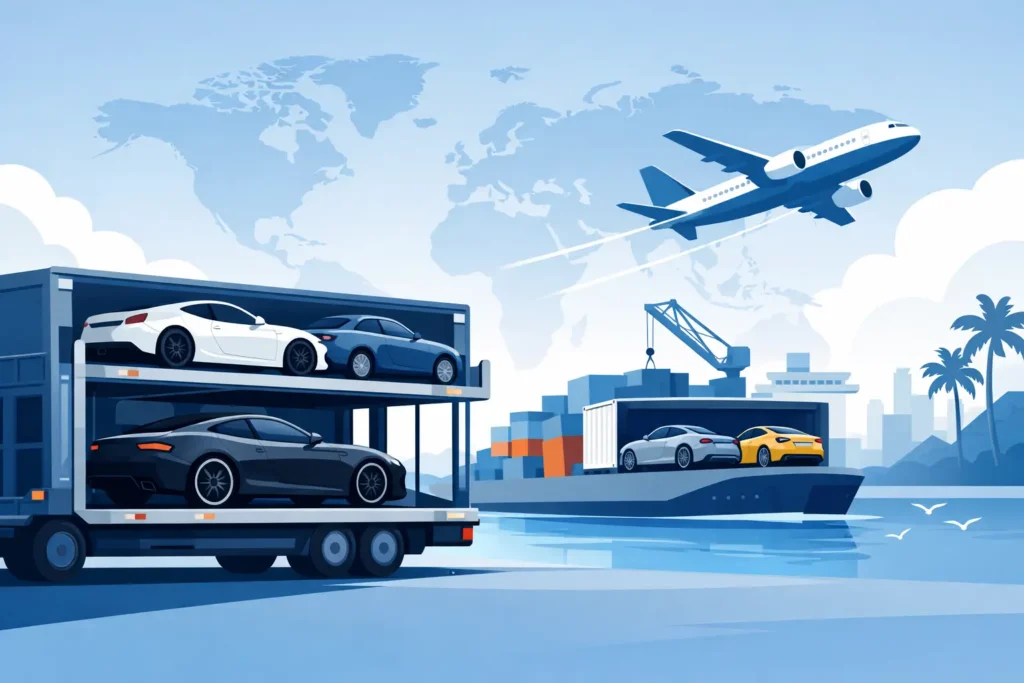
A high-value vehicle does not leave much room for error. When the cargo is a luxury sedan, supercar, collector model, or premium SUV, the shipping plan has to account for more than transit time. Luxury car transport overseas demands precision in handling, documentation, loading, customs, and delivery coordination from origin to destination.
For importers, exporters, dealers, and private owners moving vehicles between markets such as the UAE, India, and other global trade lanes, the real question is not simply how to ship a car. It is how to move a high-value asset without unnecessary risk, hidden delays, or preventable cost exposure.
What luxury car transport overseas really involves
Shipping a standard passenger vehicle and shipping a luxury vehicle are not the same job. A premium vehicle carries higher financial value, stricter condition expectations, and often more attention from insurers, customs authorities, and final buyers. That changes the transport strategy.
In practice, luxury car transport overseas includes pre-shipment inspection, route and mode selection, export paperwork, customs compliance, cargo protection, marine insurance, and controlled handover at destination. If any one of these steps is handled loosely, the shipment can face inspection delays, storage charges, cosmetic damage, or documentation disputes.
This is why many automotive clients and supply chain teams prefer a freight partner that can manage both forwarding and customs support. Coordination matters just as much as transport capacity.
Choosing the right shipping method for a luxury vehicle
The best method depends on the vehicle type, route, budget, and delivery expectations. There is no single answer that fits every shipment.
Container shipping
For most luxury vehicles, container shipping is the preferred option. It gives the car a more protected transit environment and reduces exposure during ocean movement. A dedicated container is especially useful for exotic cars, classic vehicles, limited-production models, and units with very low ground clearance.
Container shipping also supports tighter handling control. The vehicle can be secured with proper lashing, wheel chocks, and protective measures that reduce movement during transit. For clients concerned about exterior finish, interior condition, or accessory protection, this method usually offers the highest level of confidence.
The trade-off is cost. A sole-use container is more expensive than shared or open shipping options, but for a luxury asset, that additional spend often makes sense.
RORO shipping
RORO, or roll-on/roll-off shipping, can be a practical choice when the vehicle is operable and the route has strong RORO service availability. The car is driven onto the vessel and secured on a designated deck.
This option is often more cost-effective than container shipping and can work well for premium vehicles moving in volume. However, it offers less isolation than a container. For ultra-high-end vehicles or collector cars, that difference may be significant. For newer luxury models with balanced cost priorities, RORO may still be a viable option.
Air freight for urgent moves
Air freight is used far less often, but it has a place in luxury car logistics. If the vehicle is needed urgently for an event, exhibition, auction, or time-sensitive client delivery, air freight may be justified.
The obvious drawback is cost. It is substantially more expensive than sea freight, so it tends to be reserved for rare vehicles, urgent timelines, or situations where delay carries a larger financial impact than transport expense.
Why handling standards matter more than most shippers expect
A luxury car can arrive on time and still become a problem shipment if the condition changes during transit. Minor scratches, wheel damage, underbody impact, or improper securing can create expensive claims and unhappy buyers.
That is why loading procedures should never be treated as routine. Low-clearance vehicles may need specialized ramps. Performance cars with sensitive body kits require extra caution during positioning. Classic and collector vehicles may need battery checks, fluid review, and careful immobilization before loading.
A proper pre-shipment inspection is equally important. Detailed condition reports with photos help establish the vehicle’s state before departure. This protects both the shipper and consignee and gives insurers clear evidence if a claim ever arises.
For premium automotive cargo, cargo lashing is not a technical extra. It is a core risk-control measure.
Documentation can make or break the shipment
One of the biggest sources of delay in luxury car transport overseas is incomplete or incorrect paperwork. High-value vehicles often attract closer review, particularly when crossing jurisdictions with strict import rules or valuation checks.
The required documents vary by country, but usually include proof of ownership, commercial invoice or purchase invoice, export declarations, packing or shipping instructions, identification documents, and customs forms specific to the destination market. Some destinations may also require emission compliance records, homologation details, or import permits.
For businesses moving inventory between India, the UAE, and international markets, documentation accuracy directly affects lead time and landed cost. A small discrepancy in declared value, VIN details, or consignee information can result in inspection holds or additional storage charges.
This is where customs experience becomes especially valuable. A freight forwarder that understands both transport and clearance can catch issues before cargo departs, when corrections are still manageable.
Insurance is not optional for high-value vehicles
Many shippers assume carrier liability is enough. For luxury vehicles, that assumption can be expensive.
Carrier liability is limited and does not always reflect the true value of a premium car. Marine cargo insurance provides broader financial protection against transit-related loss or damage, subject to policy terms. For exotic, vintage, or collector units, the insured value should be reviewed carefully so it matches actual exposure.
The right coverage depends on the vehicle, route, and sale structure. A dealer shipping inventory may have different requirements than an individual relocating a personal vehicle or a business exporting a sold unit to an overseas buyer. Either way, insurance should be arranged before loading, not discussed after a problem occurs.
Route planning affects risk, cost, and delivery speed
Not every port pair or trade lane offers the same level of efficiency for vehicle movements. Schedules, transshipment points, port congestion, customs processes, and inland delivery requirements all shape the final outcome.
For example, a shipment moving between the UAE and India may benefit from a different routing strategy than one moving from Europe to the Gulf or from Asia to a buyer in India. Direct service can reduce handling events, but indirect routing may offer better pricing or vessel availability.
This is why the cheapest quote is not always the most cost-effective option. If a lower rate leads to extra handling, weak visibility, or longer dwell time, the total risk may outweigh the initial savings.
Door-to-door coordination matters for luxury vehicle moves
Port-to-port shipping is only one part of the journey. Many delays and damage risks happen before port arrival or after discharge, especially during local trucking, terminal handling, and final delivery scheduling.
Door-to-door planning brings these stages into one controlled process. Collection at origin, export clearance, main carriage, destination customs, and final transport are aligned under a single movement plan. For high-value cargo, that level of coordination reduces handoff risk and improves accountability.
This is particularly useful for customers who need support across multiple service areas, such as vehicle pickup, customs clearance, marine insurance, and final delivery. A company like Mass Freight Forwarding can add value here by managing the shipment across India, the UAE, and connected trade lanes rather than leaving the customer to coordinate separate providers.
How to evaluate a freight partner for luxury car transport overseas
The right logistics partner should be able to explain more than rates and transit times. They should be clear about handling methods, loading controls, customs process, insurance support, and what happens if the shipment is inspected or delayed.
Ask direct questions. Will the vehicle move by container or RORO, and why? How is the car secured? What inspection record is provided before loading? Who handles customs at origin and destination? What visibility will be available while the vehicle is in transit?
Experience with high-value cargo matters because luxury vehicle shipping has little tolerance for assumptions. The provider should understand that the shipment is not just another unit on a booking list. It is a valuable asset with commercial, personal, or collector significance.
The best shipping plan is the one that matches the car, the route, and the customer’s risk tolerance. Sometimes that means paying more for a dedicated container. Sometimes it means using RORO for a faster or more economical move. Sometimes it means building extra time into customs planning to avoid pressure at destination.
When the vehicle is valuable, the process should be deliberate from day one. A careful shipping decision protects more than the car itself. It protects the timeline, the transaction, and the trust behind the move.
