
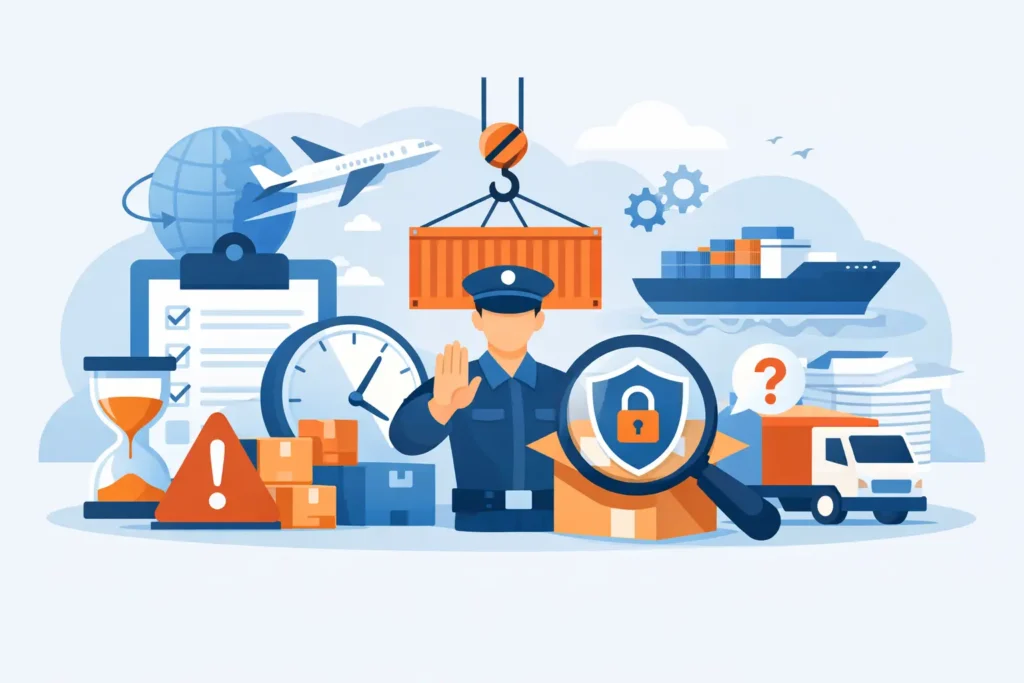
A shipment can be packed correctly, booked on time, and moved on the right vessel or flight, then still lose days at the border. For importers and exporters, the top causes of customs delays are rarely random. Most come down to documentation gaps, compliance mismatches, cargo inspection triggers, or poor coordination between the shipper, consignee, broker, and carrier.
When cargo moves through India, the UAE, or any major trade lane, customs is not just a checkpoint. It is a control point for valuation, classification, security, restricted goods, duties, and local regulations. If one part of the file does not match the rest, clearance slows down. In some cases, the delay is minor. In others, it affects storage costs, production schedules, customer delivery promises, and working capital.
Why customs delays happen more often than expected
Many businesses assume customs delays only happen when documents are missing. That is part of the picture, but not the full one. A complete file can still be delayed if the declared value appears too low, the HS code does not align with the product description, or the shipment is flagged for inspection.
This is why customs clearance is operational as much as it is administrative. It depends on timing, document accuracy, cargo profile, local rules, and how well the parties involved communicate before the shipment arrives. Companies that treat customs as an afterthought usually face more disruption than those that build compliance into the shipping process from the beginning.
Top causes of customs delays in international shipping
1. Incomplete or inconsistent documentation
This is still one of the most common reasons cargo is held. Commercial invoices, packing lists, certificates of origin, bills of lading, import permits, and product-specific approvals all need to align. If weights, values, descriptions, consignee details, or country-of-origin information do not match across documents, customs officers may stop the file for clarification.
Even small inconsistencies can create problems. A product described as “auto parts” on one document and “automotive components” on another may seem minor to the shipper, but customs may require a more precise explanation. The same applies to missing signatures, incorrect invoice formatting, or outdated licenses.
The practical fix is simple but often overlooked – documents should be reviewed as a full set, not one by one.
2. Incorrect HS code classification
HS code errors are among the costliest customs mistakes because they affect duty rates, regulatory treatment, and admissibility. If a shipment is classified under the wrong code, customs may question the declaration, request additional technical details, or reassess duties and taxes.
This issue is common with specialized cargo, machinery, electronics, chemicals, automotive parts, and multi-use products. Some items fall into gray areas where classification depends on composition, end use, or product function. That means there is not always a quick answer, especially if the shipper uses a generic code just to move the paperwork forward.
In practice, accurate classification often requires more product detail than suppliers initially provide. That extra effort upfront is far less expensive than a delay at destination.
3. Undervaluation or unclear customs value
Customs authorities pay close attention to declared value because it determines duties, taxes, and sometimes risk level. If the declared value appears below market norms, does not reflect freight or insurance where required, or lacks supporting commercial records, the shipment may be held for review.
This does not always mean intentional underdeclaration. Sometimes the problem comes from related-party transactions, promotional pricing, free-of-charge samples, split invoicing, or confusion over Incoterms and which charges should be included in the customs value.
For businesses shipping regularly between suppliers, buyers, and distribution points, valuation needs a consistent internal method. If each shipment is handled differently, customs scrutiny becomes more likely.
4. Missing permits, licenses, or product approvals
Certain products need advance approvals before they can clear. This includes pharmaceuticals, food items, cosmetics, telecom equipment, batteries, chemicals, medical devices, and some automotive products. In India and the UAE, as in many markets, these controls can involve multiple agencies beyond customs itself.
A shipment may arrive with standard freight documents in place and still be delayed because a regulatory approval was not obtained in advance. That is where many importers run into trouble. They prepare for transport but not for import control requirements.
The trade-off here is speed versus certainty. Shipping quickly without confirming permit requirements may save a day at origin, but it can cost a week or more once the cargo lands.
5. Cargo inspections and random examinations
Not every delay is caused by a mistake. Some shipments are selected for inspection based on risk criteria, product type, origin, consignee history, valuation patterns, or random control measures. When customs orders an examination, timelines depend on port congestion, inspection capacity, container accessibility, and whether additional agencies need to be present.
This is why even compliant importers sometimes face delays. The goal is not to eliminate inspection risk completely, because that is not realistic. The goal is to reduce avoidable red flags and make sure the shipment file can stand up to scrutiny if selected.
Good recordkeeping matters here. When customs asks for supporting documents, fast response time can make a real difference.
Operational issues that make customs delays worse
Poor pre-arrival coordination
One of the less visible top causes of customs delays is poor coordination before cargo reaches the border. If the broker receives documents late, if the consignee has not confirmed import registration details, or if the shipping line information is incomplete, clearance cannot start efficiently.
Pre-arrival preparation is especially important for time-sensitive cargo, project shipments, and high-value goods. In many cases, the shipment is physically on schedule but administratively behind. That gap creates unnecessary dwell time.
For supply chain managers, this is often where process discipline matters more than transport mode. Air freight moves faster than ocean freight, but if the customs file is not ready, speed in transit will not help much.
Restricted or misdeclared cargo
Customs delays also increase when cargo is restricted, hazardous, branded, oversized, or otherwise sensitive from a compliance standpoint. Problems become more serious if the goods are misdeclared. A shipment marked as general cargo that actually contains lithium batteries, controlled goods, or regulated components is far more likely to be stopped.
Misdeclaration can happen through inexperience, supplier shortcuts, or attempts to reduce duties and avoid checks. Whatever the reason, customs authorities take a strict view because the issue is not only commercial – it is also about safety and regulatory control.
For shippers handling specialized cargo, accurate declaration should include technical specifications, packaging details, and any handling classifications required by the route or destination.
Unpaid duties, taxes, or clearance charges
Sometimes the delay is straightforward. Customs will not release cargo until duties, taxes, penalties, or related charges are settled. The problem may be a funding delay, an unexpected assessment, or a dispute over how much is owed.
This becomes more common when businesses do not model landed cost correctly before shipping. If the final customs assessment is higher than expected, release may stall while the importer seeks internal approvals. That is a finance issue, but it becomes an operations issue very quickly.
The better approach is to estimate duty exposure before dispatch and confirm who is responsible for payment under the commercial terms of sale.
How to reduce the top causes of customs delays
The most effective way to reduce customs delays is to treat compliance as part of shipment planning, not as a final step. That means checking document consistency, confirming HS codes, validating customs value, reviewing permit requirements, and sharing paperwork with the clearance team before arrival.
It also helps to work with freight and customs specialists who understand route-specific requirements. A shipment into Dubai is not handled exactly like a shipment into Mumbai, and cargo moving onward to another market may face another layer of rules. Local execution matters.
For businesses shipping frequently, standard operating procedures can prevent repeat errors. Product master data, approved invoice formats, permit checklists, and internal review timelines make a difference over time. They reduce dependence on last-minute decisions and lower the risk of avoidable holds.
At Mass Freight Forwarding, this is where experience has practical value. The issue is not just moving cargo from origin to destination. It is making sure the shipment is prepared for clearance in the real conditions of cross-border trade between India, the UAE, and global markets.
Customs delays will never disappear completely because inspections, regulatory changes, and port-side issues are part of international trade. But when documentation is accurate, responsibilities are clear, and compliance is handled early, most delays become manageable instead of disruptive. The best shipment plans are not the ones that assume everything will go right – they are the ones built to keep cargo moving when customs asks questions.
