
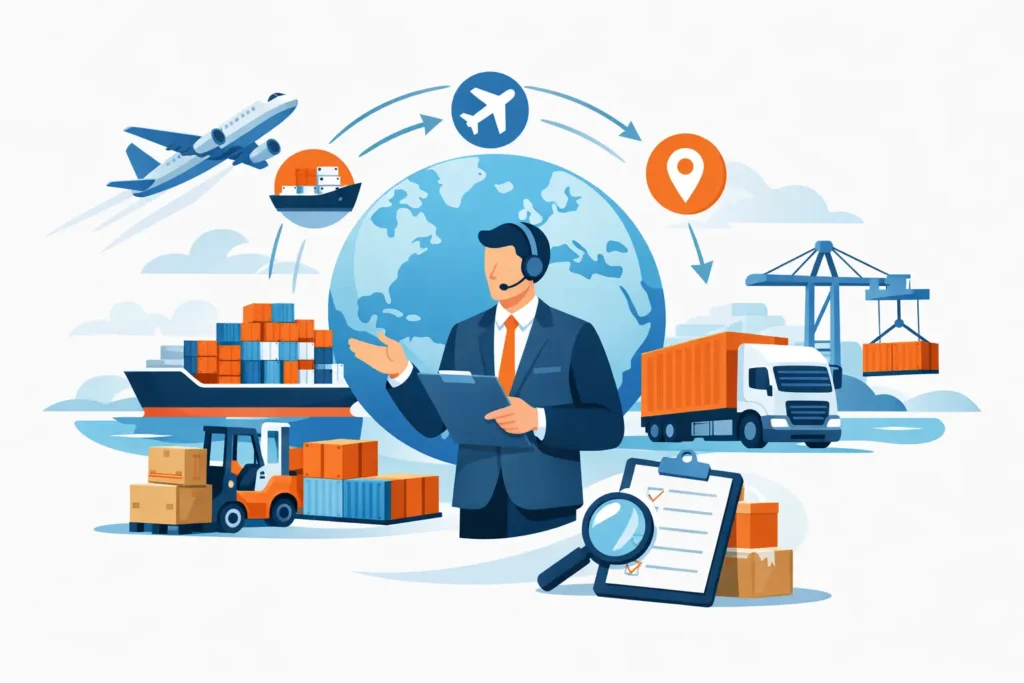
A delayed shipment rarely starts with the truck or the vessel. More often, the problem begins earlier – with the wrong documents, the wrong routing, a missed customs requirement, or a carrier booking that does not match the cargo. That is exactly where the answer to what does an international freight forwarder do becomes practical for importers, exporters, and supply chain teams. A freight forwarder coordinates the movement of goods across borders, manages shipping details, and helps reduce the operational risk that comes with international trade.
For many businesses, the freight forwarder is the party that turns a complex shipment into a controlled process. They do not usually manufacture products or own all the transport assets involved, but they organize the chain that gets cargo from origin to destination. That can include air freight, ocean freight, land transport, customs handling, warehousing, marine insurance, and final delivery.
What does an international freight forwarder do in practice?
In simple terms, an international freight forwarder plans, arranges, and oversees the shipment of goods from one country to another. The work starts before cargo moves and continues until the shipment is delivered or handed over at the agreed point.
That responsibility often includes choosing the best mode of transport, booking cargo space with carriers, preparing or reviewing shipping documents, coordinating pickup and delivery, and managing customs clearance. A capable forwarder also helps the shipper avoid unnecessary cost, delay, and compliance issues.
For businesses shipping to or from India and the UAE, this role becomes even more valuable because the process often involves multiple handoffs, country-specific requirements, and tight delivery expectations. If one part of the chain fails, the entire shipment schedule can shift.
The core functions of a freight forwarder
Shipment planning and route selection
Not every shipment should move the same way. A forwarder looks at the cargo type, dimensions, timeline, budget, origin, destination, and trade lane conditions before recommending a solution.
If the cargo is urgent, air freight may make sense despite the higher cost. If the shipment is large and less time-sensitive, ocean freight is often more economical. If the cargo is oversized, fragile, or project-based, the route may need special handling, permits, lashing, or break bulk planning. Good forwarding is not just about moving cargo. It is about choosing the right method for that specific shipment.
Carrier booking and space coordination
Freight forwarders book cargo with airlines, shipping lines, consolidators, and ground transport providers. This matters because international shipping capacity changes constantly. During peak seasons, equipment shortages, vessel rollovers, and flight space issues can affect both price and transit time.
A forwarder works to secure space that matches the shipment requirements. For LCL cargo, they may arrange groupage. For FCL shipments, they secure the container type needed. For vehicle shipping, they may recommend containerized transport or RORO depending on the route, budget, and protection required.
Documentation management
International freight moves on paperwork as much as physical transport. Commercial invoices, packing lists, certificates of origin, bills of lading, air waybills, permits, and customs declarations all need to align.
One mismatch can cause inspection, fines, storage charges, or shipment holds. Freight forwarders help prepare, review, and coordinate these documents so the cargo can move with fewer disruptions. This is one of the most underestimated parts of the job, especially for newer exporters.
Customs clearance support
Customs is where many shipments lose time and money. A freight forwarder with customs expertise helps ensure goods are classified properly, documents are submitted correctly, and clearance steps are handled in line with local regulations.
This is particularly important in markets where import procedures, duties, restricted items, and compliance checks vary by cargo type. A forwarder may coordinate directly with customs brokers or offer customs clearance as part of a broader logistics service. Either way, the goal is the same – clear the cargo quickly and correctly.
Cargo handling, storage, and delivery
A shipment does not end at the port or airport. Forwarders often coordinate warehousing, short-term storage, cargo consolidation, deconsolidation, palletization, repacking, and final-mile delivery.
For some businesses, this is where the real value shows up. Instead of managing multiple vendors for transport, storage, and local delivery, they work with one logistics partner who keeps the process organized from pickup to handover.
What an international freight forwarder does beyond transport
The best freight forwarders do more than arrange bookings. They help businesses make better shipping decisions.
Cost control
Freight cost is not just the base rate. Total landed cost can include origin charges, destination charges, customs fees, duties, insurance, port handling, storage, demurrage, and delivery costs. A forwarder helps identify where costs may increase and where better planning can reduce them.
The cheapest quote is not always the lowest-cost shipment in the end. A slower route may lead to stockouts. A poor document process may create storage fees. A forwarder looks at the full picture, not just one rate line.
Risk management
Cargo can be delayed, damaged, misdeclared, or held for inspection. Weather, port congestion, labor disruptions, and regulatory changes also affect transit. Freight forwarders help reduce those risks by planning properly, recommending suitable packaging and cargo lashing, arranging insurance when needed, and responding quickly when something changes.
Risk management is especially important for high-value shipments, vehicle transport, fragile cargo, and project logistics. These movements need tighter control than standard general cargo.
Communication and shipment visibility
Importers and exporters need updates they can act on. A reliable freight forwarder keeps customers informed about booking status, departure schedules, customs progress, delays, and delivery timing.
This may sound basic, but it directly affects procurement planning, customer commitments, warehouse scheduling, and production timelines. Good communication reduces uncertainty across the supply chain.
When businesses need a freight forwarder most
Some shipments are simple enough to move with limited support. Others clearly need a forwarder involved from the start.
If your business ships regularly across borders, deals with multiple suppliers, imports into regulated markets, or handles non-standard cargo, a forwarder becomes a practical extension of your operations team. The same applies when shipping between India, the UAE, and other global trade lanes where customs handling, timing, and coordination need close attention.
A freight forwarder is also useful when a company is growing into new export markets. New lanes often come with unfamiliar documentation rules, packaging expectations, and transit risks. Working with an experienced logistics partner can shorten the learning curve and prevent expensive mistakes.
What does an international freight forwarder do for specialized cargo?
Not all cargo fits into a standard container plan. Some shipments need tailored handling from the first step.
Cars, heavy equipment, machinery, oversized cargo, and project freight often require route surveys, lifting plans, special equipment, customs permits, and cargo securing methods that standard shipments do not. In these cases, the forwarder is not just coordinating transport. They are building an execution plan around the cargo itself.
That is why service depth matters. A forwarder that can handle standard air and ocean freight but also support customs clearance, marine insurance, door-to-door delivery, and special cargo handling gives shippers more control under one roof. For businesses moving cargo between India, the UAE, and international markets, that kind of coordination can prevent gaps between service providers. Companies such as Mass Freight Forwarding build their value around that end-to-end support.
How to choose the right freight forwarder
The right partner is not simply the one with the lowest rate. You need a forwarder that understands your cargo, your shipping frequency, and the trade lanes you rely on.
Look for experience in your origin and destination markets, strong customs knowledge, realistic transit guidance, and the ability to handle exceptions without creating confusion. If you ship specialized cargo, ask whether they have direct experience with those movements. If your business depends on timing, ask how they communicate delays and what alternatives they can offer when schedules change.
It also helps to choose a forwarder that can scale with your needs. A business may begin with occasional LCL shipments and later require warehousing, 3PL support, project cargo coordination, or door-to-door service. Logistics works better when your provider can adapt as your operation grows.
A good freight forwarder keeps cargo moving, but more importantly, keeps your business from being pulled into avoidable shipping problems. If your team is spending too much time chasing bookings, documents, customs updates, and delivery issues, it may be time to hand that work to a partner built for it.
